The 1952 Coca-Cola Playing Tips Set
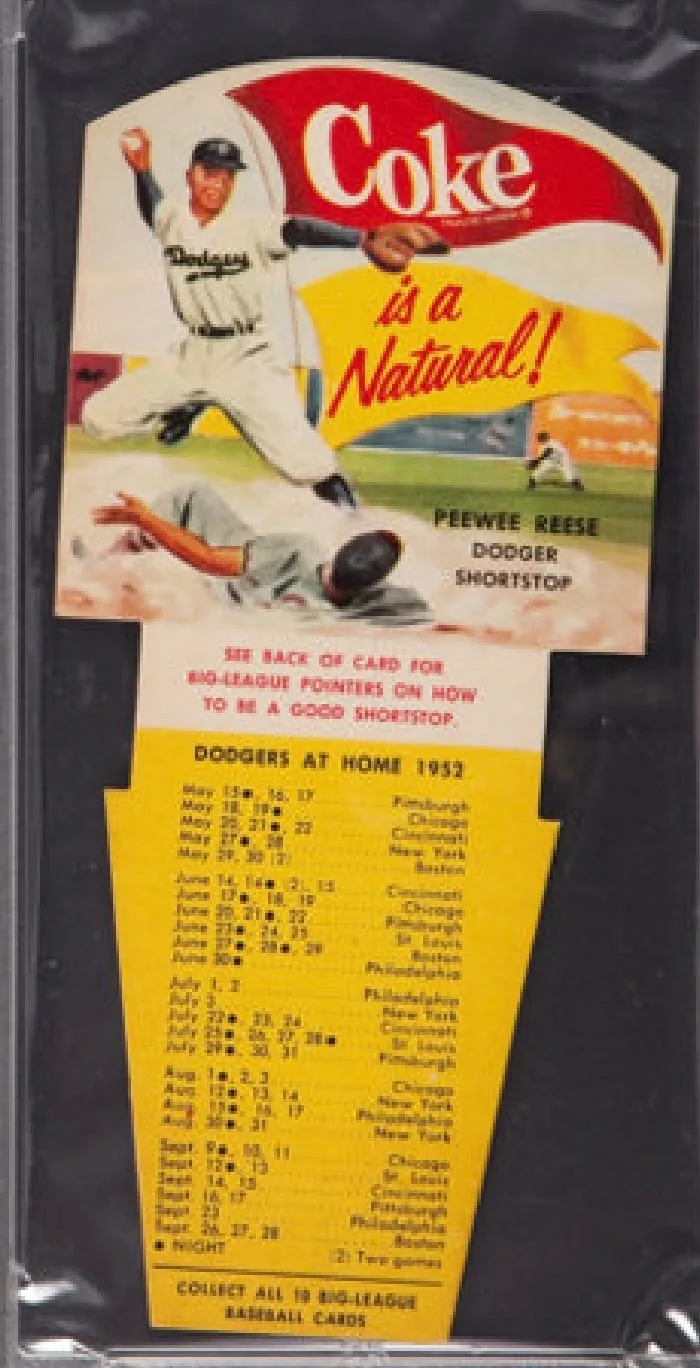
Forty years of collecting. Hundreds of card shows. And I have seen this set in person exactly once — at a show years ago. I didn’t buy it, and I still think about it.
That’s the 1952 Coca-Cola Playing Tips set. It’s way cooler than the mainstream stuff everyone has, and almost nobody knows it exists. Let me fix that.
Disclosure: This article contains eBay affiliate links. If you buy through them, I may earn a small commission at no extra cost to you — it helps keep this site going.
What is this thing?
In 1952, Coca-Cola slipped these into six-packs of Coke — big, die-cut cardboard inserts, about 3½” by 7½”, nothing like a normal baseball card. Up top: a full-color illustration of a player. On the tab below: his team’s home schedule. Flip it over: an actual baseball-playing “tip” from the player himself. Coke’s slogan that year was “What you want is a Coke!” — but if you were a kid in New York, what you wanted was one of these.
And New York is the key. These were distributed only in the New York area, which is why the checklist is all Dodgers, Giants, and Yankees. Ten cards, three teams, one city, one summer.
Why you never see them
Think about what these were: oversized, oddly shaped, printed on thin stock — and the main feature was a schedule that became worthless every October. Big, flimsy, and expired. Three strikes, straight into the trash. That’s why the survivors are so scarce.
How scarce? PSA has graded 319 cards total — not for one player, for the entire set. Compare that to the 1952 Topps Mantle alone, which has around 1,700 graded. And because the die-cut edges have all those nooks and crannies, high grades are nearly impossible: just 24 straight-grade PSA 8s exist across all ten cards, exactly two PSA 9s, and not a single PSA 10 — ever. The all-time finest registry set averages about a 7.3, and a collection like that is basically unrepeatable.
The checklist — all 10 cards, with the full PSA census
Every card is a 1952 New York star. And because the populations are so small, I can show you the entire graded universe of this set, card by card (straight grades, from PSA’s pop report):
| Card | Team | Total Graded | PSA 8 | PSA 9 | PSA 10 |
|---|---|---|---|---|---|
| Hank Bauer | Yankees | 23 | 2 | 0 | 0 |
| Carl Furillo | Dodgers | 29 | 2 | 0 | 0 |
| Gil Hodges | Dodgers | 38 | 3 | 0 | 0 |
| Ed Lopat | Yankees | 28 | 6 | 0 | 0 |
| Gil McDougald | Yankees | 28 | 1 | 1 | 0 |
| Don Mueller | Giants | 25 | 1 | 0 | 0 |
| Pee Wee Reese | Dodgers | 33 | 3 | 0 | 0 |
| Bobby Thomson (3rd Baseman) | Giants | 31 | 2 | 1 | 0 |
| Bobby Thomson (Hitting) | Giants | 25 | 1 | 0 | 0 |
| Wes Westrum | Giants | 23 | 3 | 0 | 0 |
Read that table again and let it sink in. The most-graded card in the set — Gil Hodges — has 38 copies. Total. The Bauer and Westrum have 23 each. Exactly two PSA 9s exist in the entire set (one McDougald, one Thomson 3rd Baseman), and there has never been a PSA 10 of any card. For most of the checklist, a PSA 8 with a pop of 1, 2, or 3 is literally the finest known.
Yes — Bobby Thomson has two cards, less than a year after the Shot Heard ‘Round the World. And if you read my 1952 Topps guide, you’ll recognize half these names: Hodges, Reese, Thomson. Same legends, completely different — and far, far scarcer — cardboard.
The hidden bombshell: the Willie Mays test card
Here’s the deep-cut detail that even seasoned collectors don’t know. Before the main release, Coke ran a test version of the set — and the test issue included a Willie Mays card that was dropped from the final ten. The Mays test card is the only one with a bio on the back, and it reads “Collect All 11 Big-League Baseball Cards” — proof the set was originally planned with him in it.
That Mays is one of the rarest post-war regional cards in existence — a handful have ever sold publicly. There are also three different versions of a Phil Rizzuto test card. If you ever, and I mean ever, see either in the wild, you are looking at a genuine unicorn.
What are they worth?
With populations this tiny, there’s no neat price-per-grade chart — sales are too rare. The honest picture: mid-grade examples of the ten regular cards generally run into the hundreds, strong examples four figures, and the big names (Reese, Hodges, Thomson) command premiums. A complete high-grade set is a five-figure trophy the few times one has ever come to auction. The test cards — especially the Mays — are another universe entirely.
The real answer to “what’s it worth” is: whatever it takes, if you ever get the chance. These do not sit in dealer cases waiting for you.
My take: this is what collecting is actually about
Everybody chases the same twenty mainstream cards — and look, I write guides to those cards, I get it, I chase them too. But this is the stuff that makes the hobby fun: a die-cut Coke insert from one city, one summer, seventy-plus years ago, with Pee Wee Reese sliding across the front and a Dodgers home schedule hanging off the bottom. You can’t fake the cool on something like this.
If one ever surfaces in a collection you’re buying, or in a dusty case at a show — don’t do what I did. Buy it. I passed once, years ago, and I’ve regretted it ever since.
🔗 See if any 1952 Coca-Cola Playing Tips cards are listed right now »
Found something like this and wondering what to do with it? These are exactly the kind of cards worth grading for authentication alone. (See “Is It Worth Grading Your Card in 2026?” and “How Card Grading Works in 2026”.)
Explore every 1952 set in the complete 1952 guide →
Related articles
-
1952 Topps Red Backs vs. Black Backs: Which Is Worth More?
A collector’s guide to 1952 Topps red-back and black-back variations — which cards have them,… Read the guide → -
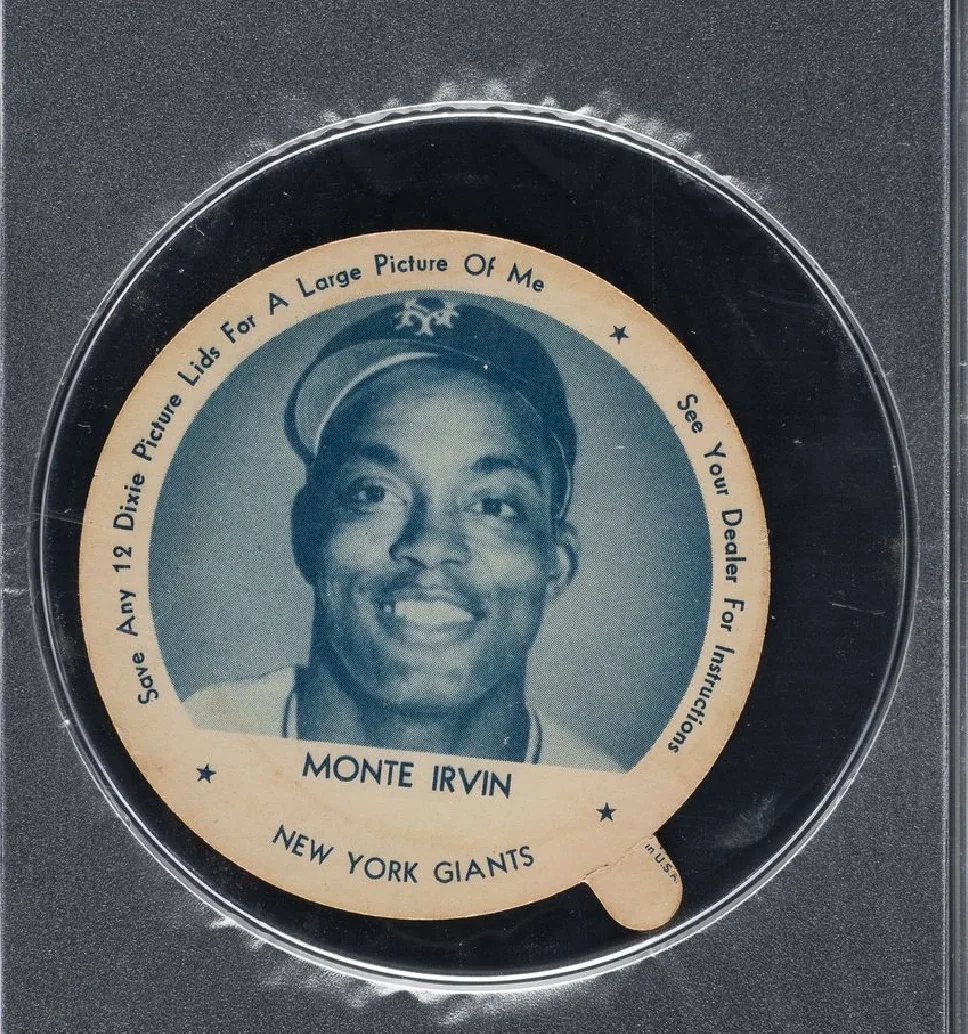
The 1952 Dixie Lids
The 1952 Dixie Lids — a 24-lid ice cream set with just 29 graded examples in existence and no… Read the guide → -
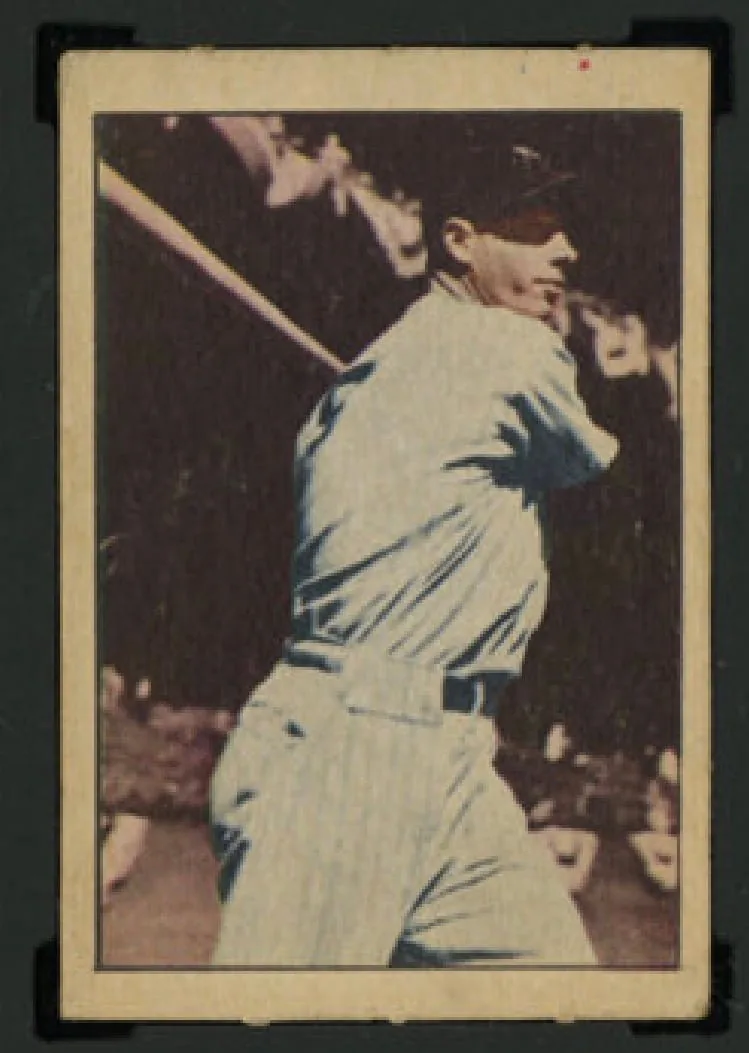
The 1952 Berk Ross Set
The 1952 Berk Ross set — the unlicensed 'bootleg' that gave the hobby its only 1952 Joe DiMag… Read the guide →