The Most Valuable 1952 Topps Baseball Cards
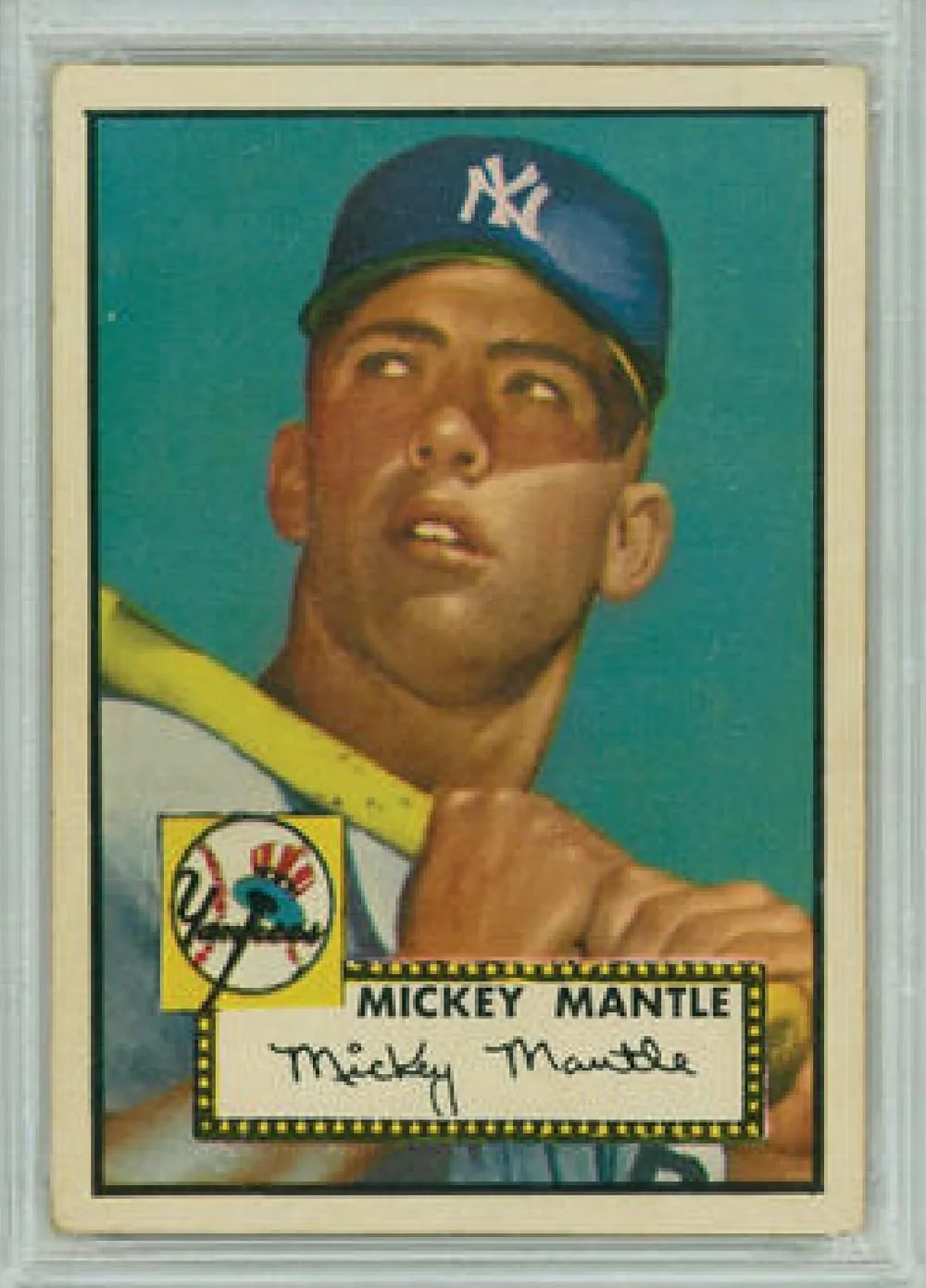
If there’s one set that is the hobby, it’s 1952 Topps. It’s Topps’ first major set, it’s stuffed with 27 Hall of Famers, and it’s one of the three “monster sets” collectors talk about in the same breath as the T206 tobacco set and 1933 Goudey. It’s also the second-most-collected set on the entire PSA registry. This is the one everybody wants.
I’ve been chasing and handling these cards for 40 years, so this isn’t a price list I copied off a guide. These are the cards I’d actually go after, with my honest take on each one — which are crown jewels, which are undervalued, which are money pits, and which you’ll never find in decent shape no matter how hard you look.
Disclosure: This article contains eBay affiliate links. If you buy through them, I may earn a small commission at no extra cost to you — it helps keep this site going.
First, the story that makes this set legendary
You can’t understand 1952 Topps without the ocean story.
Topps rushed the high-number series (cards #311–407) out late in the 1952 season, and by the time it hit shelves, kids had turned their attention to football. Sales tanked. Topps got stuck with cases of unsold high numbers sitting in a Brooklyn warehouse. Around 1960, needing the space, Topps executive Sy Berger — the guy who co-designed the set on his kitchen table — loaded roughly 300 to 500 cases (about three garbage trucks’ worth) onto a barge, had it tugged a few miles off the New Jersey shore, and dumped them into the Atlantic Ocean. Mantles, Mays, Robinsons — all to the bottom of the sea.
(You’ll sometimes hear it told as the Hudson River, but Berger’s own interviews put it in the Atlantic off Atlantic Highlands.)
That’s why the high numbers are so brutally scarce today, and why the biggest cards in this set are the ones numbered 311 and up. Keep that in mind as you read — “high number” is code for “hard to find and expensive.”
And condition is the other half of the story. Of the roughly 185,000 1952 Topps cards PSA has ever graded, only 73 have earned a PSA 10. Seventy-three. That’s the whole set, across every card. These were toys — flipped, rubber-banded, stuck in bicycle spokes — so a truly clean one is a genuine survivor.
A note on values below: I’ve given approximate ranges to show you the tier each card lives in, and population figures from PSA’s report to show you how scarce each one really is up top. But 1952 Topps prices move fast and depend enormously on grade and eyeball. Always check recent sold comps for the exact card and grade before you buy or sell. Condition is everything in this set.
The ranking
1. Mickey Mantle — #311
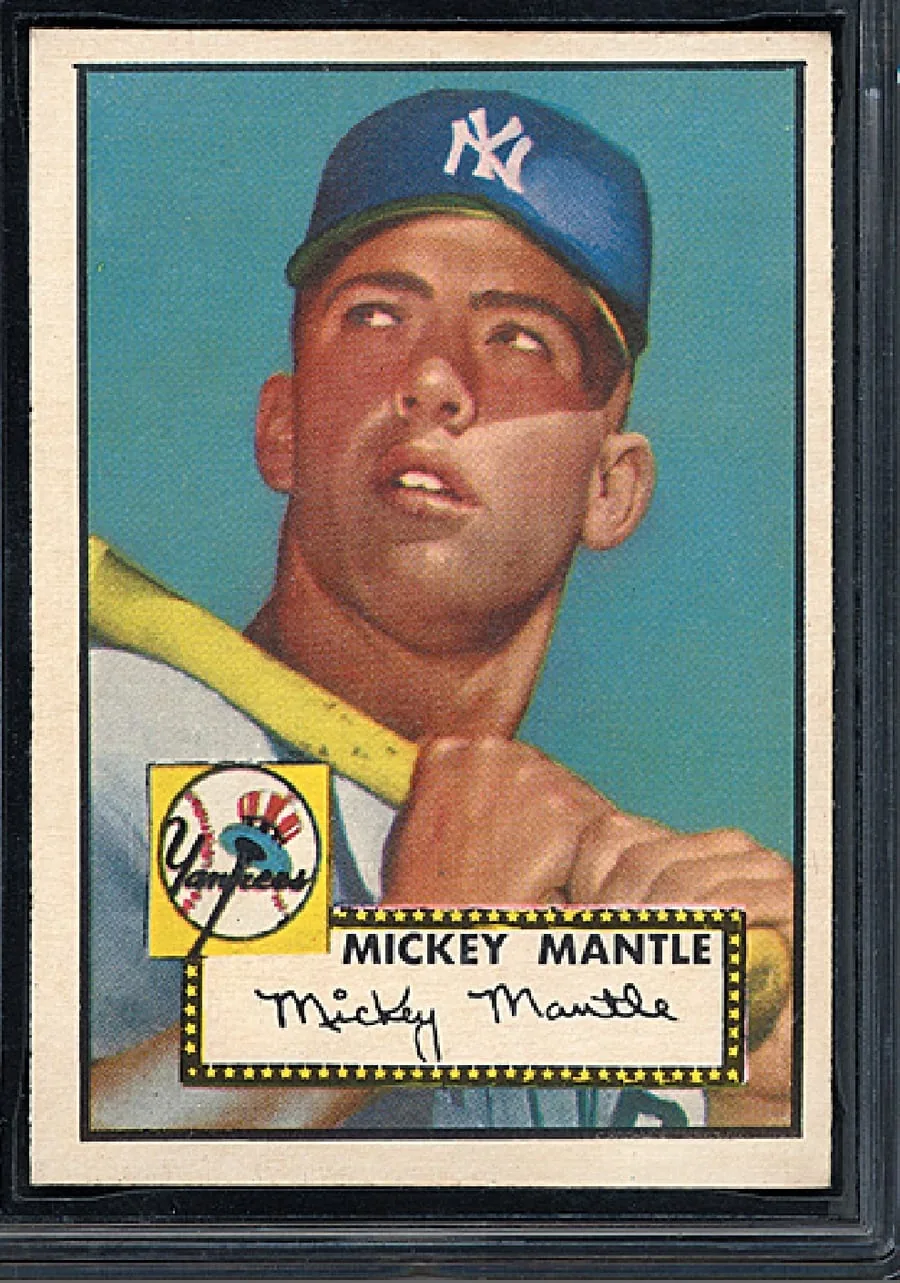
Value: ~$10K–$20K raw, ~$27K–$35K in PSA 1, ~$70K–$115K in PSA 2–3 (a PSA 2.5 set a record at $158,600 in April 2026), into the millions in top grade — and up roughly 25% in 2026. PSA population: 1,689 graded, with just 35 PSA 8s, 6 PSA 9s, and 3 PSA 10s — only 44 copies grade 8 or better.
This is the crown jewel for any baseball card collector mature enough to understand what it means to the hobby. Every guy over forty went to a card show, saw that card, could’ve bought it for five hundred to a thousand bucks — and didn’t. Or they had one and their parents threw it out. And now it’s worth hundreds of thousands. That’s the ache of this card. It’s the absolute crown jewel of Topps baseball.
If you ever get your hands on one, grade it immediately — mainly to prove it’s real, because fakes, reprints, and trimmed copies are everywhere. Know this going in, though: if it’s trimmed or altered, PSA won’t give it a number. It comes back “Authentic Altered,” and that slab sells for a lot less than a clean, unaltered low-grade copy. But a genuine, unaltered Mantle, even beat to heck, is worth serious money. You just never find them. If you pull one from a collection, consider it the luckiest day of your life.
2. Willie Mays — #261
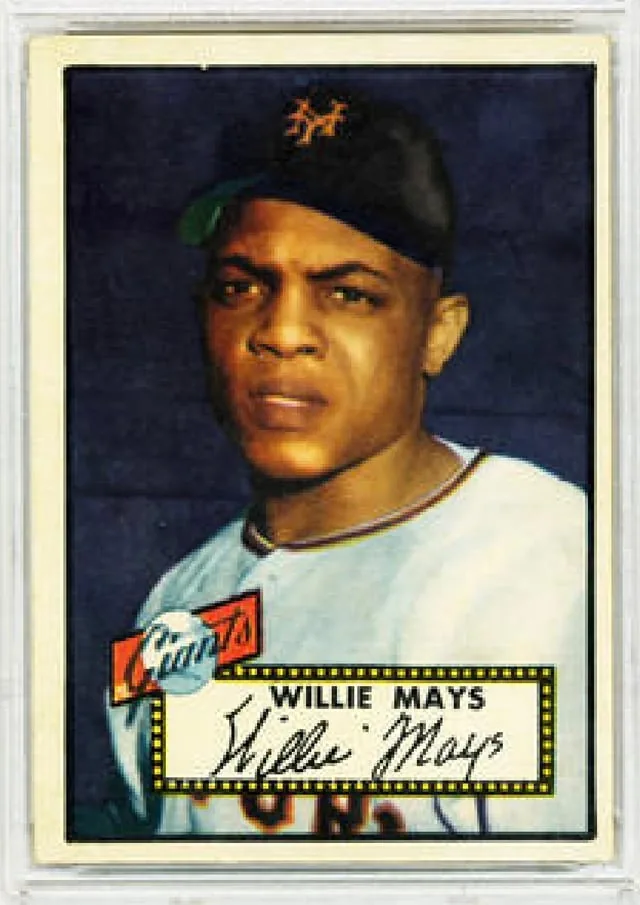
Value: low four figures in low grade, ~$10K in PSA 5, well into five figures in high grade. PSA population: 2,602 graded, with just 60 PSA 8s, 9 PSA 9s, and a single PSA 10 — only 70 copies grade 8 or better.
Arguably the best card in the set. Look at Mays’ stats — he might be the best player of all time, better numbers than Mantle. But he doesn’t get the love Mantle gets, because Mantle is the GOAT of the hobby and Mays is second. To me, that makes the ‘52 Mays one of the most undervalued cards there is. It’s still expensive, don’t get me wrong — especially in high grade. But if you’re building this set, you gotta have Mays, Mantle, Mathews, all the high numbers. It’s one of the hardest sets of all to complete.
3. Eddie Mathews — #407 (rookie)
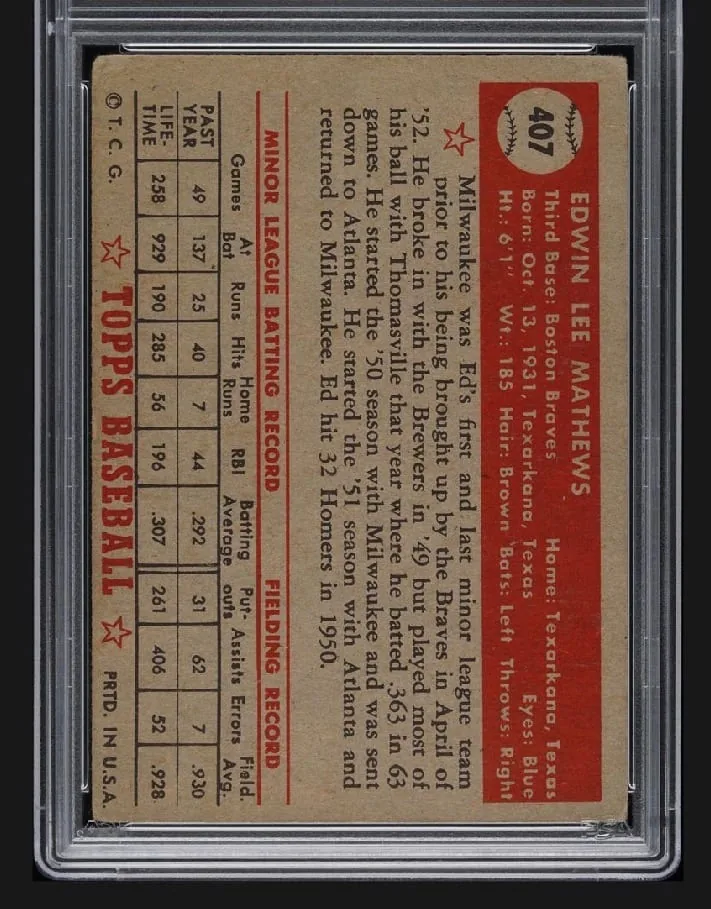
Value: ~$3K in PSA 1, ~$7K in PSA 2, ~$11K in PSA 5, well into five figures in high grade — the set’s second-most valuable card. PSA population: just 827 graded, with only 14 PSA 8s, 2 PSA 9s, and zero PSA 10s — a mere 16 copies grade 8 or better.
A lot of people overlook the Mathews if they don’t really understand the set. It’s the last card in the set — which makes it brutally condition-sensitive. Stored in a box, it got beat up just from opening the box. And it’s a short print on top of being a high number. So it’s a high number AND an SP, one of the hardest cards to find in one of the hardest sets to find. Forget about it. The Mathews is incredible, and it’s his rookie. Behind Mantle, this is the one.
4. Jackie Robinson — #312
Value: ~$5K in PSA 1, ~$35K in PSA 6, $100K+ in PSA 8 (one sold for $112,850 in early 2026) — strong money in every grade thanks to its historical weight. PSA population: 1,249 graded, with just 44 PSA 8s, 11 PSA 9s, and zero PSA 10s — only 55 copies grade 8 or better.
Broke the barrier, did it all. What else can I possibly say about Jackie? It’s another high number in one of the hardest sets to find, and it’s what makes this set absolutely iconic. The names in this set just go on and on and on. This one’s my favorite card in the set by a mile.
5. Roy Campanella — #314
Value: ~$1,300 in PSA 3, ~$6,300 in PSA 7, ~$11K–12K in PSA 8, into the $20Ks–$30Ks in the highest grades. PSA population: 790 graded, with just 44 PSA 8s, 6 PSA 9s, and 2 PSA 10s — only 52 copies grade 8 or better.
Absolute Dodgers stud. A Dodgers legend, part of what makes the Dodgers who they are — the heritage of that franchise is literally built in part on Roy Campanella. Another high number, hard to find, epic in every way. If you’re doing this set, gotta have it. Gotta happen.
6. Pee Wee Reese — #333
Value: a few hundred in low grade, low-to-mid four figures in high grade — a high number, so scarcer than his star status alone suggests. PSA population: just 689 graded, with only 37 PSA 8s, 5 PSA 9s, and 1 PSA 10 — 43 copies grade 8 or better.
Jackie’s boy. The man who stood up for Jackie when everyone else didn’t — who said “he’s our guy” and rooted for him while he broke the color barrier. Super important. Hall of Famer, Dodgers captain, and he rounds out the Dodgers Hall of Famers in the set. Great guy, great card.
7. Bobby Thomson — #313
Value: a few hundred in low-to-mid grade, into four figures in high grade — a fan favorite for the ‘51 pennant shot, and a double-printed high number so a bit more attainable than its neighbors. PSA population: 842 graded, with 57 PSA 8s, 8 PSA 9s, and 1 PSA 10 — 66 copies grade 8 or better.
Not in the Hall of Fame — but I mean, come on. The Shot Heard ‘Round the World, the 1951 pennant-winning home run. His 1952 card probably excited every single kid on planet Earth when it came out, because he set the world on fire in ‘51. (Fun fact: #311–313 were double-printed, so Mantle, Robinson, and Thomson lead off the high-number sheet together.)
8. Duke Snider — #37
Value: ~$100 in low grade, a few hundred in mid-grade, into the low thousands in high grade — a low number, so one of the more attainable Hall of Famers in the set. PSA population: roughly 2,090 graded across both back variations (red and black back), with about 76 PSA 8s, 8 PSA 9s, and zero PSA 10s.
Funny one, this. Low number, not as hard to find — they’re out there. And here’s something only a guy who buys collections would tell you: it’s crazy how many Duke Snider signed balls I find in collections. Can’t get more than thirty or forty bucks for them, though. He must have been one of the nicest guys ever and signed for every single person on Earth. Great player, “Willie, Mickey and the Duke,” Hall of Famer — just a more accessible card than the high-number legends. (Collector note: the #37 exists with two different back colors, tracked separately.)
9. Andy Pafko — #1
Value: ~$130–$360 in low grade, ~$1,700–$3,700 in PSA 6 — but a PSA 8 sold for a record $183,000 in 2025. The definition of a condition-rarity card. PSA population: ~2,100 graded across both back variations, yet only 9 PSA 8s, zero PSA 9s, and a single PSA 10 — savage proof of how the #1 card got beat up on top of the stack.
Card number one — we all know it. Not the greatest player ever, but it’s the #1 card in the most iconic set of all time. Finding a Pafko in decent condition is incredible. Finding it in excellent or near-mint? You might hit the jackpot. Kids stuck #1 on top of the stack, wrapped a rubber band around it, and destroyed it — so a clean one is a genuine trophy. Hard, hard to find nice. (Like Duke, the #1 exists in red-back and black-back versions.)
10. Yogi Berra — #191
Value: ~$1,000 in mid-grade, into five figures in high grade — a notoriously tough centering card, and arguably Yogi’s most important. PSA population: 1,872 graded, with just 28 PSA 8s, 3 PSA 9s, and zero PSA 10s — only 31 copies grade 8 or better.
Can’t forget Yogi — the Yogisms, the quotes, Mickey Mantle’s best friend. Yogi, Mickey, and Whitey. Imagine hanging out with those three back in the day; the stories are legendary. Card #191 for the Yankees catcher — epic. (Fun tie-in: Yogi always credited Bill Dickey — card #17 on this list — as the man who taught him to catch.)
11. Hoyt Wilhelm — #392 (rookie)
Value: ~$500–$800 in low grade, ~$1,800 in PSA 4, into five figures in high grade — Wilhelm’s only true rookie and a tough high number, second only to Mathews among the set’s rookies. PSA population: just 679 graded, with 55 PSA 8s, 7 PSA 9s, and 1 PSA 10 — 63 copies grade 8 or better.
Another one whose autograph is worth basically nothing — he must’ve been as nice as Duke Snider; maybe they were roommates, who knows. Hoyt Wilhelm, Hall of Famer, and this is his rookie. A high number, and behind the Mathews (and Mantle), one of the most important rookies in the set. Another one you have to have to complete it.
12. Warren Spahn — #33
Value: ~$140–$345 in low-to-mid grade, ~$750+ in PSA 6–7, into the low thousands in high grade — a low number, so an attainable Hall of Famer. PSA population: ~2,240 graded across both back variations, with roughly 74 PSA 8s, 6 PSA 9s, and zero PSA 10s.
Back to the low numbers. Warren Spahn, one of the greatest pitchers in MLB history — and the winningest left-hander ever. Let this hit you: it’s 2026, and Spahn is still the winningest lefty in Major League history, off a 1952 card. No wonder he’s a Hall of Famer. Braves fans love him. (Like several early-series cards, the #33 exists in red-back and black-back versions.)
13. Phil Rizzuto — #11
Value: ~$160 in low grade, a few hundred in mid-grade, but $5,000–$6,300 at PSA 7 — a low-number Hall of Famer that stays affordable until the top grades. PSA population: ~1,520 graded across both back variations, with only about 32 PSA 8s, 3 PSA 9s, and zero PSA 10s.
Scooter. Low number, card #11. MVP, and the broadcaster who coined “Holy Cow.” Yankees fans love Phil Rizzuto — an epic legend, incredible in every way. I actually met Phil Rizzuto once at a restaurant in Boca Raton when I was about sixteen years old. He couldn’t have been a nicer guy. I can’t say enough great things about him.
14. Gil Hodges — #36
Value: ~$20–$95 in low grade, a few hundred in mid-grade, into four figures in high grade — a beloved, attainable low-number Hall of Famer (finally elected in 2022). PSA population: ~1,600 graded across both back variations, with roughly 56 PSA 8s, 8 PSA 9s, and zero PSA 10s.
In the fifties, if you were going hard, you were either a Dodgers fan or a Yankees fan. And if you were a Dodgers fan, Gil Hodges was on your wall somewhere — or you were throwing his cards against walls with your friends and sticking them in your bicycle spokes. Card #36. Later, the manager who led the 1969 Miracle Mets to the World Series. Hall of Famer in 2022 — took way too long.
15. Monte Irvin — #26
Value: ~$60–$200 in low-to-mid grade, ~$330 in PSA 5–6, into four figures in high grade — an affordable, historically important low-number Hall of Famer. PSA population: ~1,410 graded across both back variations, with roughly 72 PSA 8s, 5 PSA 9s, and zero PSA 10s.
Another important guy. Jackie Robinson gets all the love, but Monte Irvin was a Negro Leaguer who made it to the bigs too. Card #26. Really special guy, and a piece of the story that usually gets overshadowed. (He was also part of the first all-Black outfield in the majors, alongside Willie Mays, in 1951.)
16. Joe Page (#48) / Johnny Sain (#49) — the error cards
Value: the “wrong bio” error versions carry a real premium — roughly $300–$800+ in mid-grade, into four figures in high grade. Variation note: the first black-back printing contains the wrong-biography errors, and a later black-back printing corrected them. PSA says the red-back print run contains only the corrected biographies.
Now we get into the real collector stuff. Cards #48 and #49 — Joe Page and Johnny Sain — are error cards, and it’s an interesting story. Some #48 Joe Page black backs have Johnny Sain’s write-up, and some #49 Johnny Sain black backs have Joe Page’s write-up. Topps corrected the biographies before the red-back run. Definitely an oddball, and variation people love these. This is peak master-set territory — if you’re building the master set, you have to have every kind there is, and the error versions are the ones that’ll make you hunt.
For the complete explanation, see 1952 Topps red backs vs. black backs.
17. Bill Dickey — #400
Value: ~$500–$700 in low-to-mid grade, ~$1,000+ at PSA 5, several thousand into five figures in high grade — a tough high number. PSA population: 603 graded, with just 29 PSA 8s, 3 PSA 9s, and zero PSA 10s — only 32 copies grade 8 or better.
Card #400, Yankees catcher, Hall of Famer — and believe it or not, he’s the one who taught Yogi Berra how to be Yogi. He was his mentor. Pretty cool story, and a tough high number to track down.
18. Robin Roberts — #59
Value: ~$140–$245 in low-to-mid grade, ~$395 at PSA 5, several thousand in high grade — a low-number Hall of Famer with notoriously tough centering. PSA population: ~1,370 graded across both back variations, with roughly 39 PSA 8s, 3 PSA 9s, and zero PSA 10s.
It’s incredible how many heavy-hitter names are in this set. Card #59, Robin Roberts — Hall of Fame ace for the Phillies, one of the greatest pitchers of all time. Nobody had control like him. He was the workhorse, banged around, ate a ton of innings. Superstar. (He won a career-high 28 games the year this card came out.)
19. Billy Martin — #175 (rookie)
Value: ~$300–$600 in low-to-mid grade, ~$800–$1,500 in PSA 5–6, ~$4,800 at PSA 8 — a hobby-favorite rookie of a larger-than-life figure. PSA population: 1,273 graded, with just 28 PSA 8s, 2 PSA 9s, and zero PSA 10s — only 30 copies grade 8 or better. (A rare “gray back” variation of #175 exists with just ~32 total graded — a real chase for master-set builders.)
Billy Martin makes me think of John McEnroe — he’s the McEnroe of baseball. He’d scream and yell and go crazy, but he won five World Series. And we all know how wild he was as a manager. Mickey Mantle’s best buddy, too. Mantle, Whitey Ford, Martin — all those guys drinking in bars and partying together. The stories are legendary. Gosh, I wish I was there. This is his rookie card, #175.
20. Bob Feller — #88
Value: ~$300–$610 in low-to-mid grade, into four figures in high grade — “Rapid Robert,” a Cleveland legend, affordable at the low end. PSA population: 2,042 graded, with 88 PSA 8s, 7 PSA 9s, and 1 PSA 10 — 96 copies grade 8 or better.
Bob Feller, card #88 — superstar pitcher, Indians Hall of Famer. Another guy who signed a million autographs, so his signature’s cheap — but people love Bob Feller. Rapid Robert was a flamethrower and a genuine superstar. In Cleveland, he was a god.
So which ones would I actually chase?
If you’re building the set, you can’t avoid the high-number Hall of Famers — Mantle, Mays, Mathews, Robinson, Campanella, Wilhelm, Dickey. Those are the wall you have to climb, and they’re where the real money and the real difficulty live.
But if you’re looking for value, my honest take is the Mays is the most undervalued card in the set for what it is, and the low-number stars — Spahn, Rizzuto, Snider, Hodges, Roberts — are where a real person can actually own a piece of this legendary set without a second mortgage. They’re out there, they’re gorgeous, and they’re Hall of Famers.
And if you ever pull one of the big ones out of a collection? Before you do anything else, figure out whether it’s worth grading — that’s a whole decision of its own. (See “Is It Worth Grading Your Card in 2026?” and “How Card Grading Works in 2026”.)
And if this set has its hooks in you, its hand-painted follow-up is every bit as essential — see “The Most Valuable 1953 Topps Baseball Cards”.
Explore every 1952 set in the complete 1952 guide →
Because the whole magic of 1952 Topps is that some of these cards are still out there, sitting in a box someone doesn’t understand. That’s the hunt. That’s the fun.
How I’d sell a 1952 Topps card
Flip it around — say you’re holding these and want to sell. Same honesty, in reverse.
Start with grading. On the crown jewels — the high-number Mantle, Robinson, Mays, Campanella — you almost have to slab them to sell them right, and not just for the grade. This is one of the most faked, trimmed, and reprinted sets in the hobby, and buyers know it. A genuine slab answers “is it real?” before they even ask, and that certainty is a big chunk of the price. Raw, even a gorgeous card takes a suspicion discount. But the affordable low-number stars — Spahn, Rizzuto, Snider — rarely clear the grading fee, so sell those raw. (Not sure which is which? The math’s here: “Is It Worth Grading Your Card in 2026?”.)
Then: don’t dump the good cards in one lot. The key cards should each be listed singularly — that’s exactly the mistake I look for as a buyer, so don’t make it as a seller. One card, one listing.
And price off auction-only sold comps for the exact card and grade — the real number the market paid, not a hopeful Buy It Now. Factor your cost basis, too: what you’ve already got into a card sets your floor.
Related articles
-
1952 Topps Red Backs vs. Black Backs: Which Is Worth More?
A collector’s guide to 1952 Topps red-back and black-back variations — which cards have them,… Read the guide → -
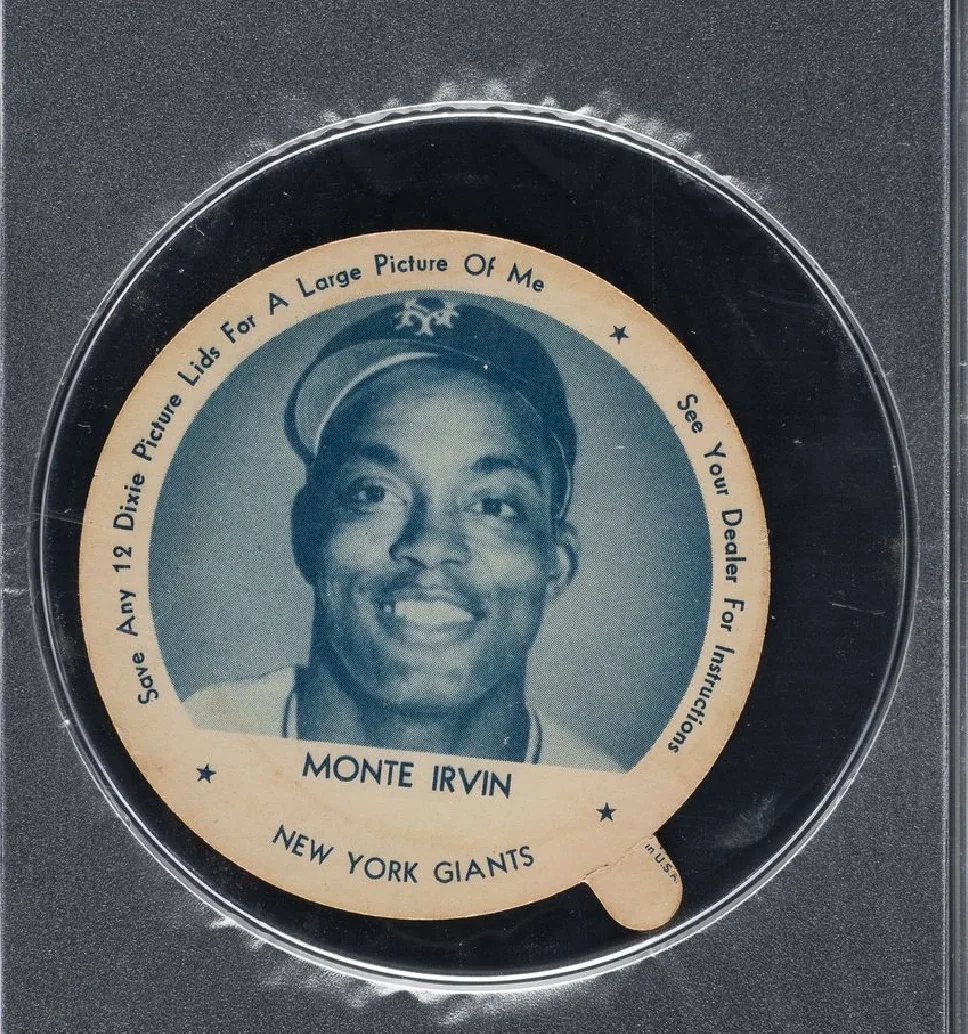
The 1952 Dixie Lids
The 1952 Dixie Lids — a 24-lid ice cream set with just 29 graded examples in existence and no… Read the guide → -
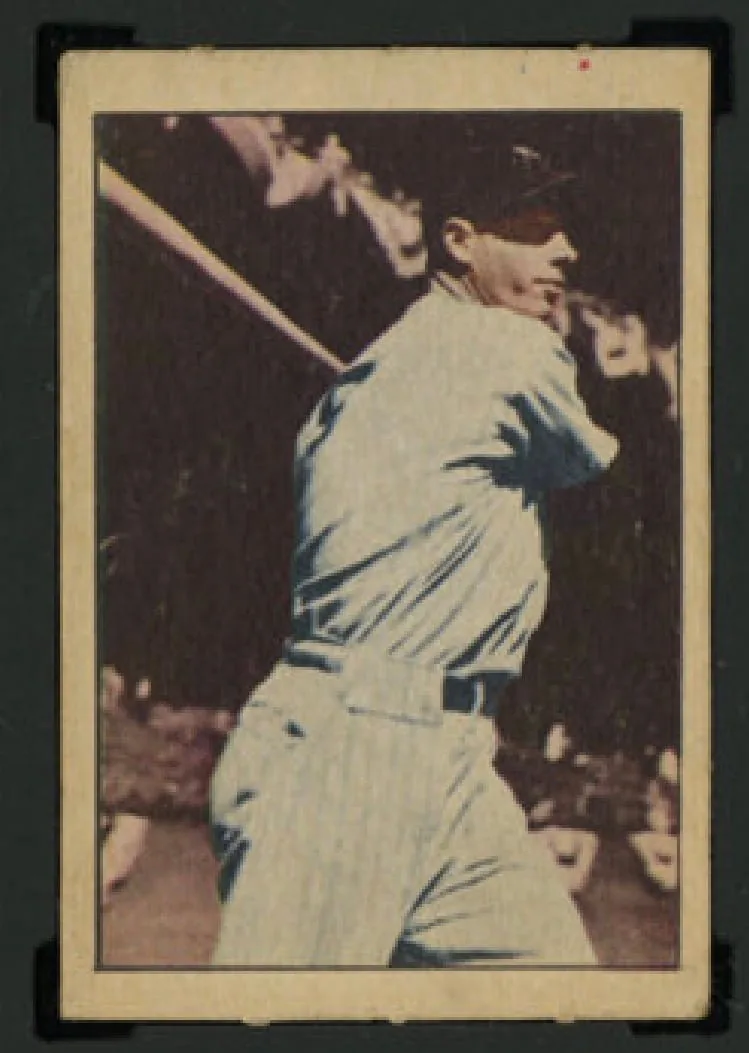
The 1952 Berk Ross Set
The 1952 Berk Ross set — the unlicensed 'bootleg' that gave the hobby its only 1952 Joe DiMag… Read the guide →