1955 Topps Baseball Cards: Values, Rookies and Collecting
The compact 206-card 1955 Topps set introduced Roberto Clemente, Sandy Koufax and Harmon Killebrew while bringing back Hank Aaron, Willie Mays, Jackie Robinson and Ted Williams. Its horizontal design looks unlike almost anything around it. This hub organizes the key cards, checklist, condition risks, grading decisions and buying advice in one place.
The Most Valuable 1955 Topps Baseball Cards
Clemente and Koufax lead a collector-focused ranking with buying, condition and grading advice.
See the complete ranking →1955 Topps quick reference
| Cards issued | 206 |
|---|---|
| Card size | Approximately 2⅝ × 3¾ inches |
| Format | Horizontal fronts with portrait and action images |
| Key rookies | Roberto Clemente #164, Sandy Koufax #123 and Harmon Killebrew #124 |
| Major stars | Ted Williams #2, Aaron #47, Robinson #50 and Mays #194 |
| Major condition problems | Centering, print defects, corner wear, surface wrinkles and staining |
The cards to identify first
| Card | Why it matters | First move |
|---|---|---|
| Roberto Clemente #164 RC | The set’s cornerstone and one of the hobby’s defining postwar rookies | Authenticate valuable raw examples |
| Sandy Koufax #123 RC | A flagship rookie with demand well beyond set collectors | Inspect centering and surface carefully |
| Harmon Killebrew #124 RC | A more approachable Hall of Fame rookie beside Koufax in the checklist | Compare color and image focus |
| Ted Williams #2 | A condition-sensitive early checklist card of an all-time hitter | Look for wrinkles and edge wear |
| Willie Mays #194 | A prime-year card with broad, durable collector demand | Prioritize eye appeal over the holder |
1955 Topps collector guides
-
1955 Topps Checklist, Rookies and Set Guide
The complete 206-card structure, key rookies, stars and condition problems collectors need to know. Read the guide → -
Is Your 1955 Topps Card Worth Grading?
Use conservative grade estimates and real breakeven math before paying submission fees. Read the guide → -
Where I Actually Buy Vintage Cards
How to use eBay, auction houses and card shows without mistaking asking prices for value. Read the guide →
Why collectors keep coming back to 1955
The rookie class is the headline, but the set works because it has very little filler for its size. Clemente, Koufax and Killebrew appear alongside established stars, and the horizontal artwork gives even affordable cards display appeal. A collector can pursue one major rookie, a Hall of Fame run or the entire set without buying the same way.
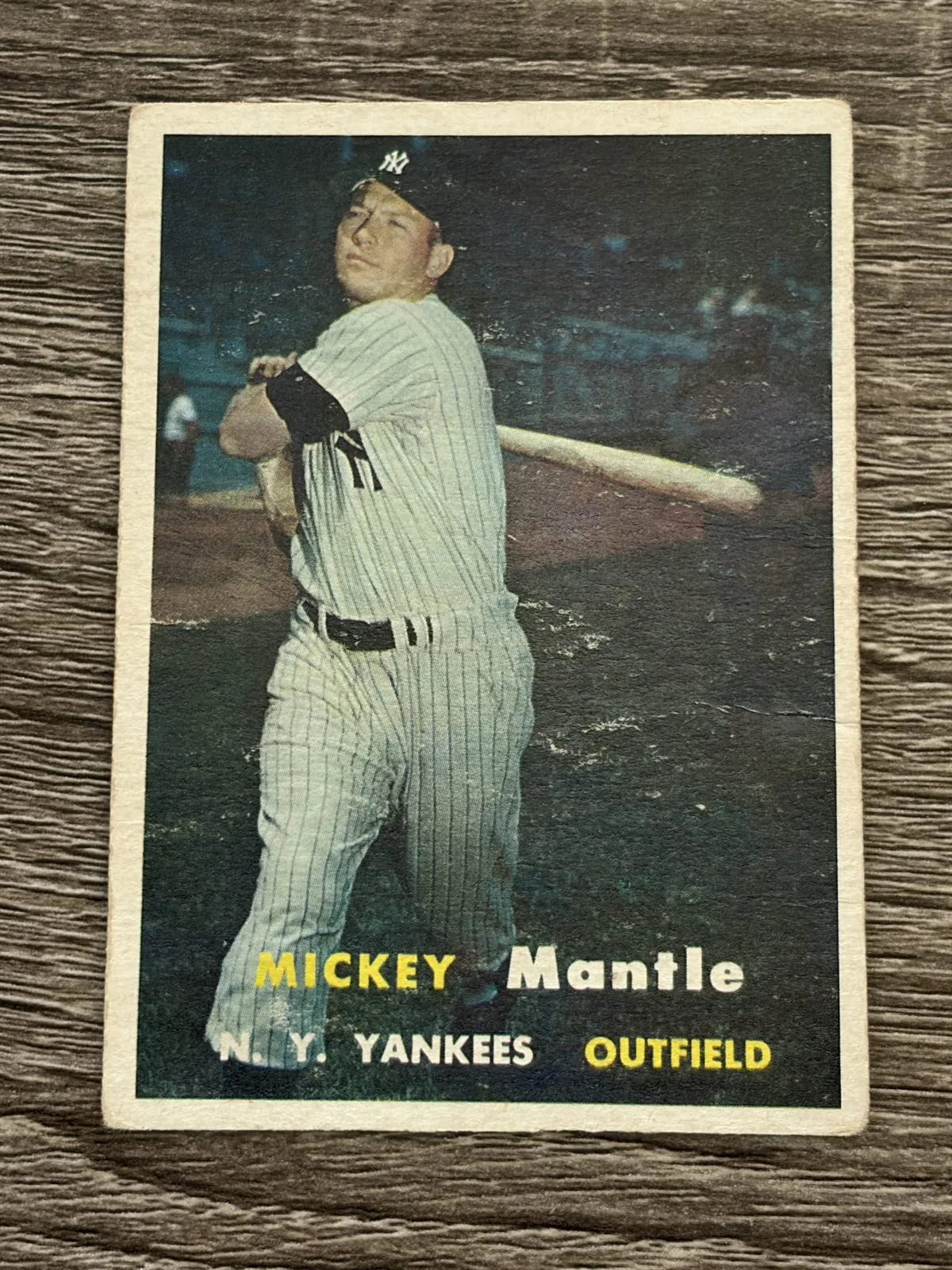
Mickey Mantle does not appear in the set, so do not treat a seller’s missing-Mantle claim as evidence that a collection was picked over. Start with the actual checklist and identify the key rookies and stars that belong.
Grade it or keep it raw?
Grading is most useful when authentication and a shared condition scale add more value than the fee, shipping, insurance and wait. That frequently applies to Clemente and Koufax and can apply to strong Killebrew or star cards. It usually does not apply to worn commons. Use the grading breakeven calculator with a conservative grade.
For raw cards, ask for straight-on front and back photographs plus angled light. Horizontal centering can be deceptive, and small wrinkles may disappear in a bright phone picture. Compare recent sold examples—not active asking prices—in the same condition.
What comes next
The next 1955 guides will go deeper on the Clemente and Koufax rookies and explain how to sell an inherited collection. Those pages will be added only when they offer something more useful than a repeated checklist summary.