Is It Worth Grading Your Card in 2026?
Disclosure: This post contains eBay affiliate links. If you buy through them, I may earn a small commission at no extra cost to you.
Someone hands me a card and asks, “Should I grade this?” Here’s the first thing I do, and it’s probably not what you’d expect: I assume it’s not going to get a 10.
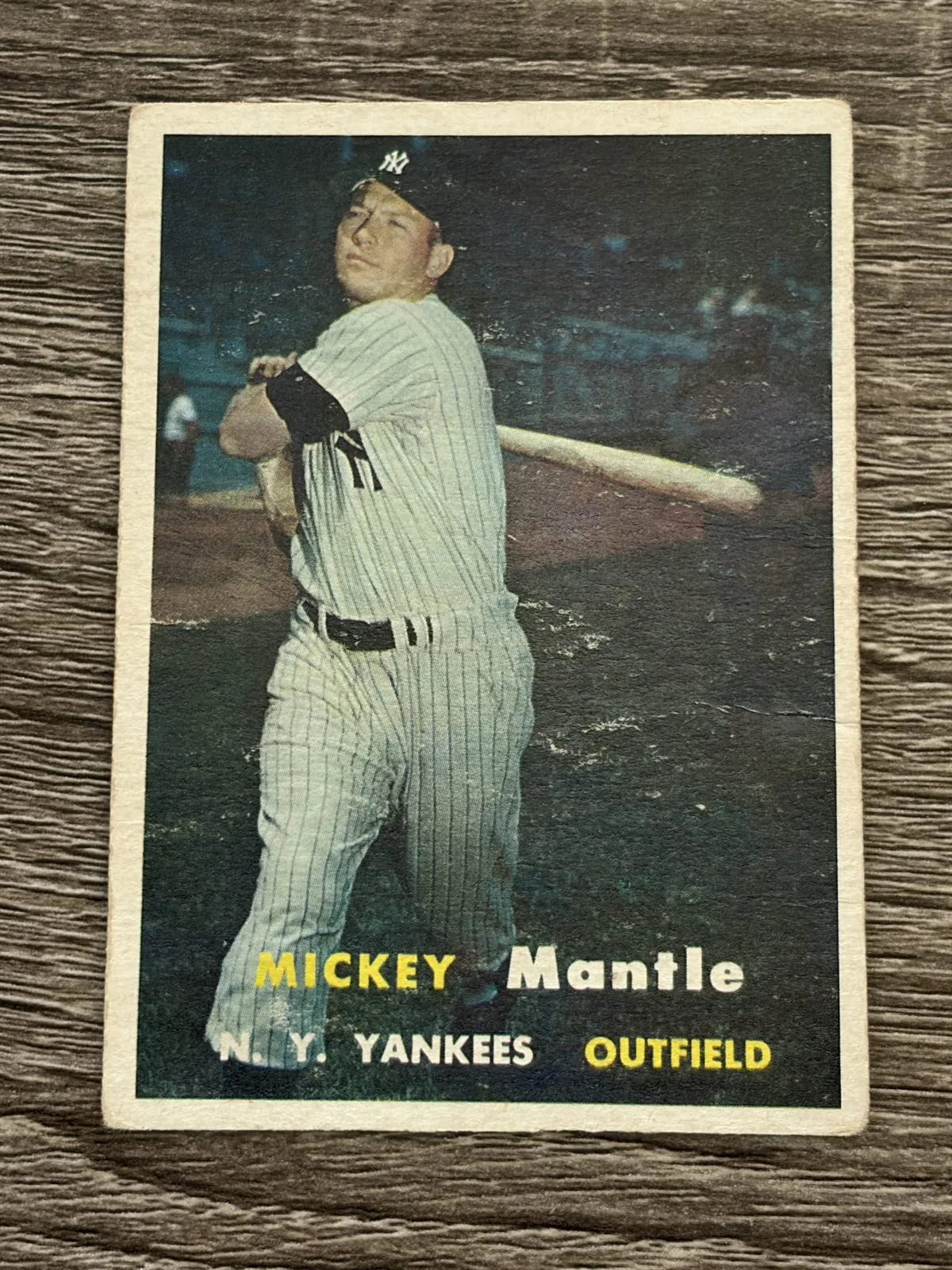 The card this whole article is about — a beat-up 1957 Topps Mantle #95. Real card, real wear, shot on my own desk.
That’s not pessimism. It’s how you keep yourself honest. The whole hobby runs on PSA 10 dreams, and those dreams are exactly what empty your wallet at the grading counter. If you start from “this is a 10” and work down, every flaw feels like a disappointment. Start from “this isn’t a 10” and work up, and suddenly you’re making a decision based on what the card actually is — not what you hope it is.
So before we talk about corners and centering, let’s talk about the only question that matters: will grading this card make you money, or cost you money? (Want the shortcut? I built the whole framework below into a free breakeven calculator — but read on so you know what the numbers mean.)
Forget the dream grade. Find your breakeven grade.
Most people grade emotionally. They look at a sharp card, picture a 10, and mail it off. The collectors who actually come out ahead do something different — they find the breakeven grade first.
Here’s the move. Before anything else, I check what it currently costs to grade at the cheapest available tier. Then I go to eBay and look at recent sold prices across grades. I’m not looking for the home-run number. I’m looking for the floor: what’s the lowest grade I’d need for this card to cover the grading cost and still come out ahead?
That one question reframes everything. You’re no longer betting on perfection. You’re asking whether a realistic, likely-case grade clears the bar. If the card needs a flawless 10 just to break even, that’s not an investment — that’s a lottery ticket. If it breaks even at an 8 and prints money at a 9, now you’ve got something.
A real example: a 1957 Topps Mickey Mantle that you shouldn’t grade
Let me show you the math on a real card, because it breaks the biggest myth in the hobby.
I’ve got a 1957 Topps Mantle, #95, in my hand. It’s a beat copy — off-center left to right, all four corners worn, paper loss and gloss issues on the front, dirty edges, and a crease through the lower corner. Honest, well-loved, low grade. The kind of card most people assume you grade automatically, because hey, it’s a Mantle.
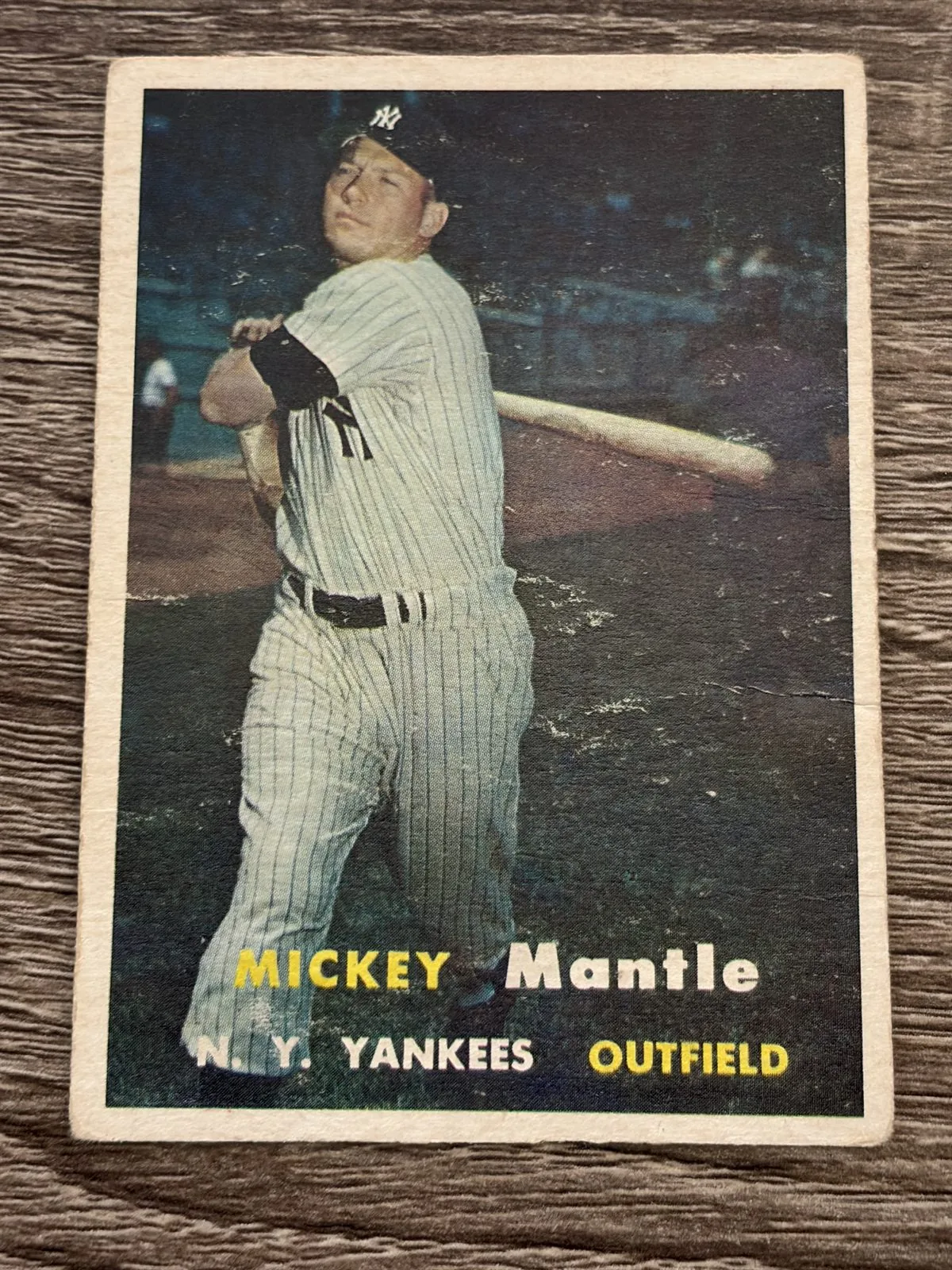 Off-center left to right — the left border’s clearly fatter than the right. On a ‘57, centering alone can hold a card back.
Get in close and the story gets worse for the grade. All four corners are soft, the bottom-left frayed down to the fibers. But the real killer is the crease.
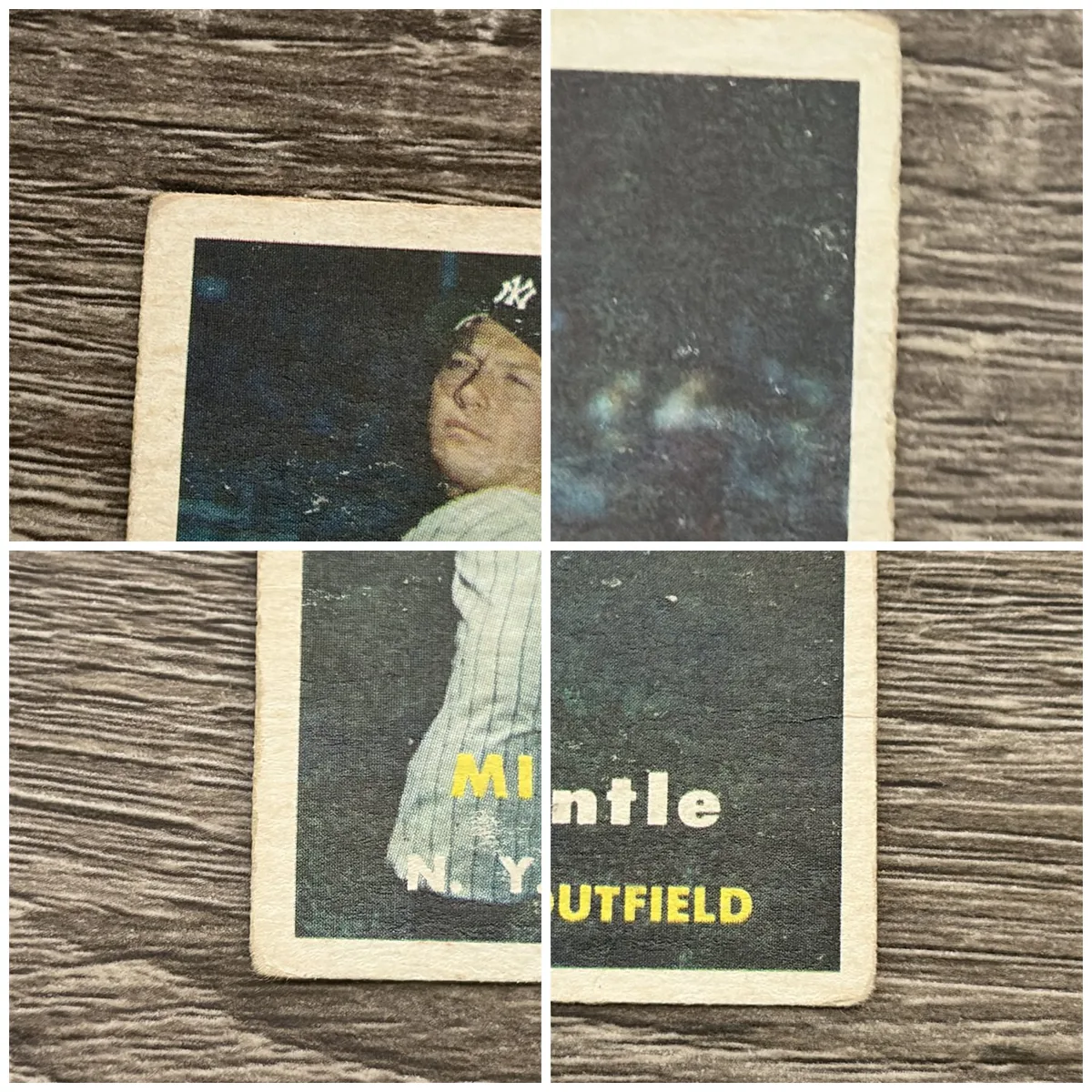 All four corners worn, bottom-left frayed to the fibers. None of them sharp.
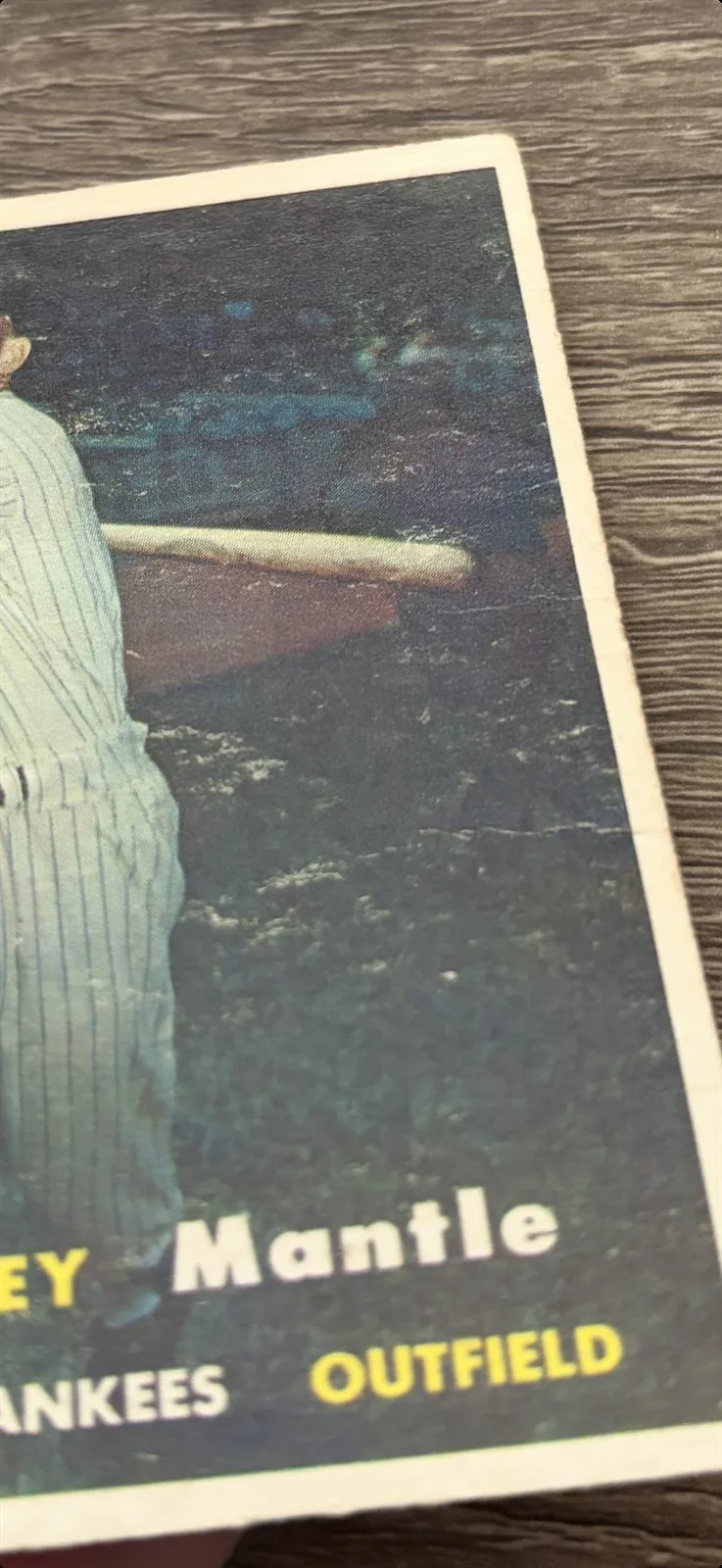 Light raked across the surface so the flaws pop. That diagonal line through the lower right is a crease — and a crease alone caps the grade no matter what else is going on.
And here’s the part most people miss when they only glance at the front: that crease goes through both sides. Flip the card over and it’s right there on the back too, running through the cartoon and the team banner. A crease you can see front and back isn’t a maybe — it’s a hard ceiling.
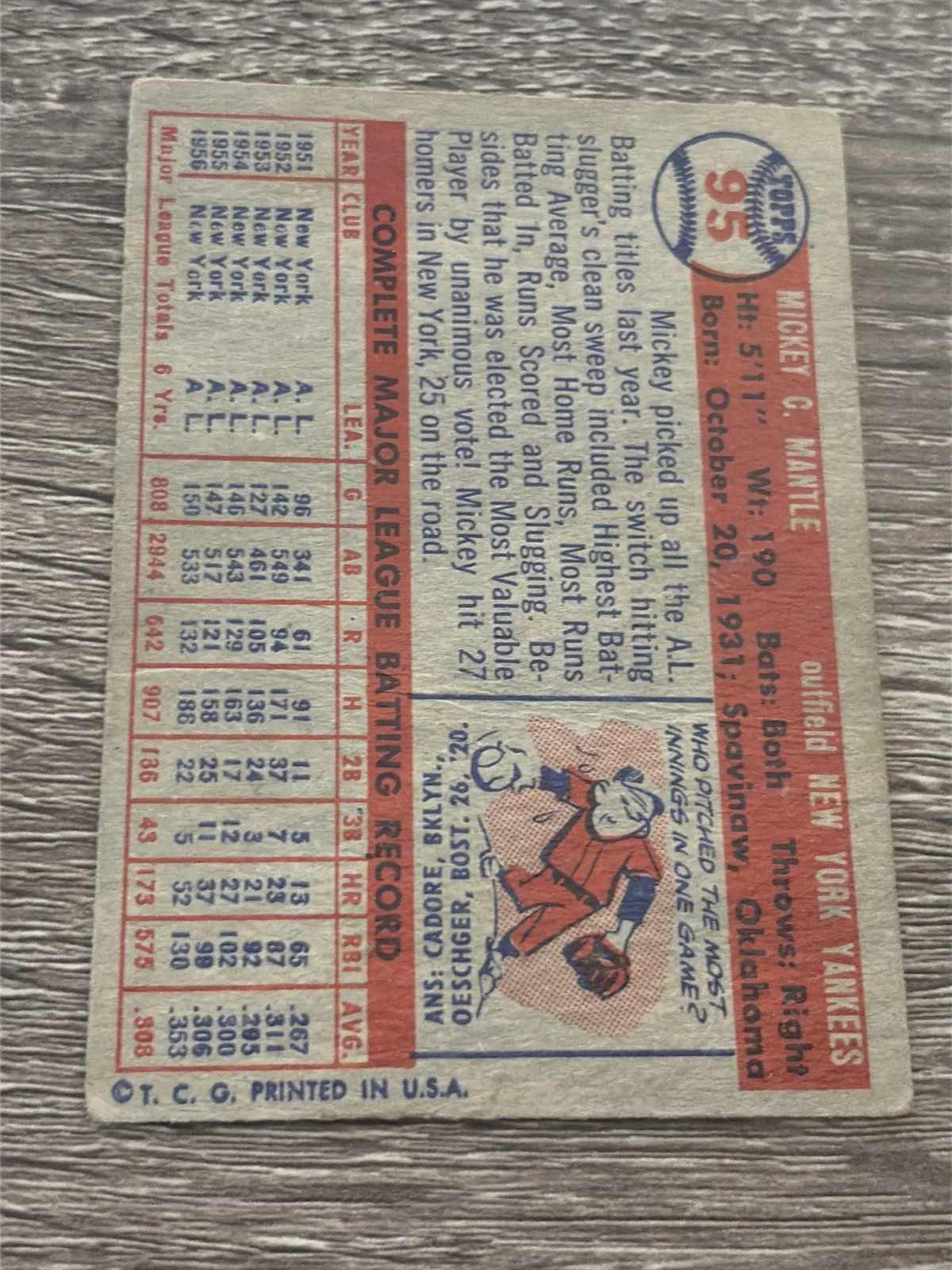 The back. The print’s still bright, but look closely — the same crease runs through here too, and the centering’s off on this side as well. “Cleaner back” only goes so far.
Here’s how I pull comps. I don’t eyeball asking prices — I filter eBay to auction-only, sold listings. Buy It Now prices are what a seller hopes to get; auction results are what the market actually paid. That’s the only number I trust.
So here are the two real, recent comps:
- Raw, low grade — sold at auction June 21 for $380.00
- PSA 1 — sold at auction June 27 for $446.69
The “bump” for getting it slabbed at the lowest grade is about $67.
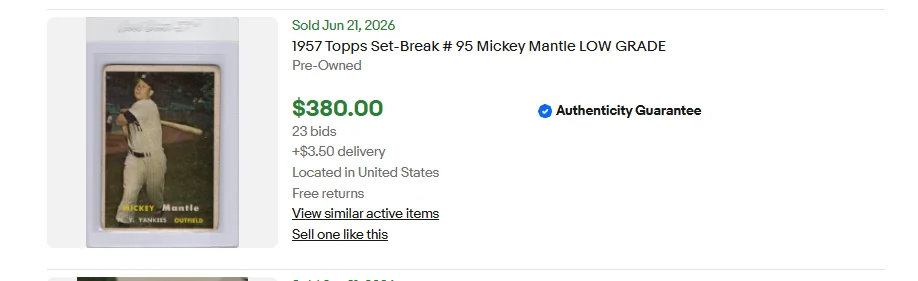 Raw, low grade: $380.00, 23 bids. An auction result — what someone actually paid.
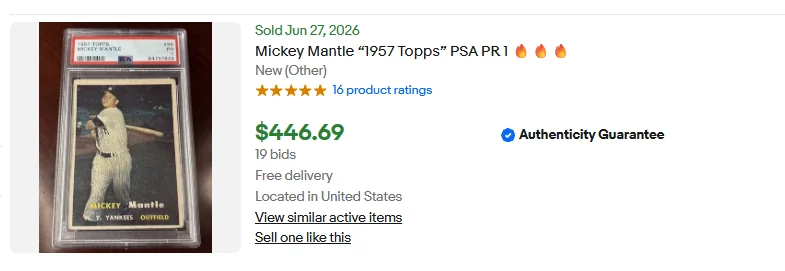 The same card in a PSA 1 slab: $446.69, 19 bids. That’s a $67 bump for the lowest possible grade.
See what 1957 Mantle #95s are selling for right now on eBay.
Now the cost side — and this is where most people fool themselves, because the grading fee is not the real cost.
The card’s worth a few hundred, so it lands in PSA’s Regular tier: $79.99 per card, max declared value $1,500, roughly a 40–50 business-day wait. The cheap Value tier that would normally fit is suspended right now because of the backlog, so Regular is the floor today.
But $79.99 is just the sticker. Here’s what PSA’s own checkout actually totals:
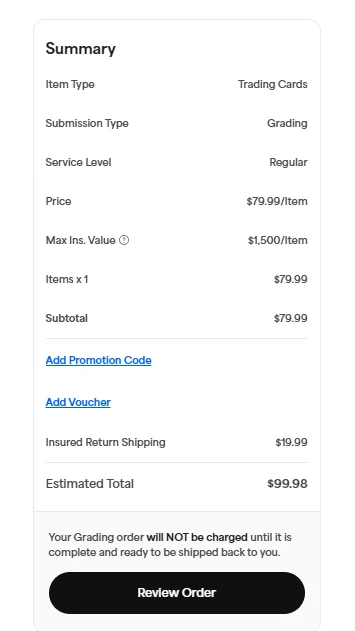 PSA’s own checkout. The $79.99 fee is only part of it — required insured return shipping pushes it to $99.98 before the card even ships.
- Grading: $79.99
- Insured return shipping: $19.99 (required — they’re not mailing a graded Mantle back uninsured)
- Submission subtotal: $99.98
And that’s before your card even leaves your house. You still have to ship it to PSA — call it $6–$10 with tracking and insurance, which you’d never skip on a card like this.
True all-in cost: roughly $106–$110. Not $80.
Do the real math:
Graded bump: $67 True all-in cost: ~$106–$110 ($79.99 grading + $19.99 insured return + ~$6–10 to ship in) Result: you’re underwater by about $40 — before eBay even takes its cut of the sale.
It’s a Mickey Mantle, and grading it still doesn’t pencil out. In fact, once you count the shipping both ways and the insurance PSA requires, it’s not even close. That’s the whole point. The card being a legend doesn’t override the arithmetic — and the arithmetic is the grading fee plus everything PSA doesn’t put in big print.
And notice what the math tells you to do instead: wait. When the Value tier reopens at roughly a third of the Regular price, that same $67 bump flips from a loss into a real profit. Same card, same comps — the only thing that changed is patience. Sometimes the right grading move is to not grade yet.
And one factor almost nobody accounts for: your cost basis. A card you pulled out of a $20 collection box is a completely different decision than the same card you bought raw at a card show for real money. If you got it for nothing, the math is forgiving. If you paid up front, that cost rides on top of the grading fee and your breakeven grade climbs. Same card, two totally different answers — it all depends on what you’ve already got into it.
It’s all math. The card in your hand is just one variable.
The wait is part of the bet
Say the numbers work. You’re still not done, because grading isn’t instant — and the time it takes is a risk all its own.
Even at the cheapest tier, assume your card is gone for three to nine months. And right now that math is worse than usual: PSA suspended its cheapest “Value” submissions entirely, buried under a backlog of millions of cards. So the budget tier most people are counting on isn’t even on the table at the moment, which pushes the real entry cost — and your breakeven grade — higher.
Now stack the calendar on top of that. If you’re grading a card tied to an active player heading into a new season, you’re not just betting on the card. You’re betting on a whole season you can’t see yet. What happens if he gets hurt in week two? What happens if he has a cold year? The value you bought into ahead of time can tank while your card sits in a queue you can’t pull it out of.
Of course, it cuts both ways. He breaks out, and the patience pays off big. That’s the upside.
So the real question underneath all the math is simple: are you a gambling man or not?
The gamble vs. the safe play
Once you frame it that way, cards basically split into two piles.
The gamble: modern, active players. These are the cards where the wait and the season risk really bite. The player’s story isn’t written yet, the market can swing, and you’re locking your money up for months while it all plays out. These can absolutely pay off — but you’d better have the breakeven math working in your favor before you submit, because you’re betting on the future, not just grading the present.
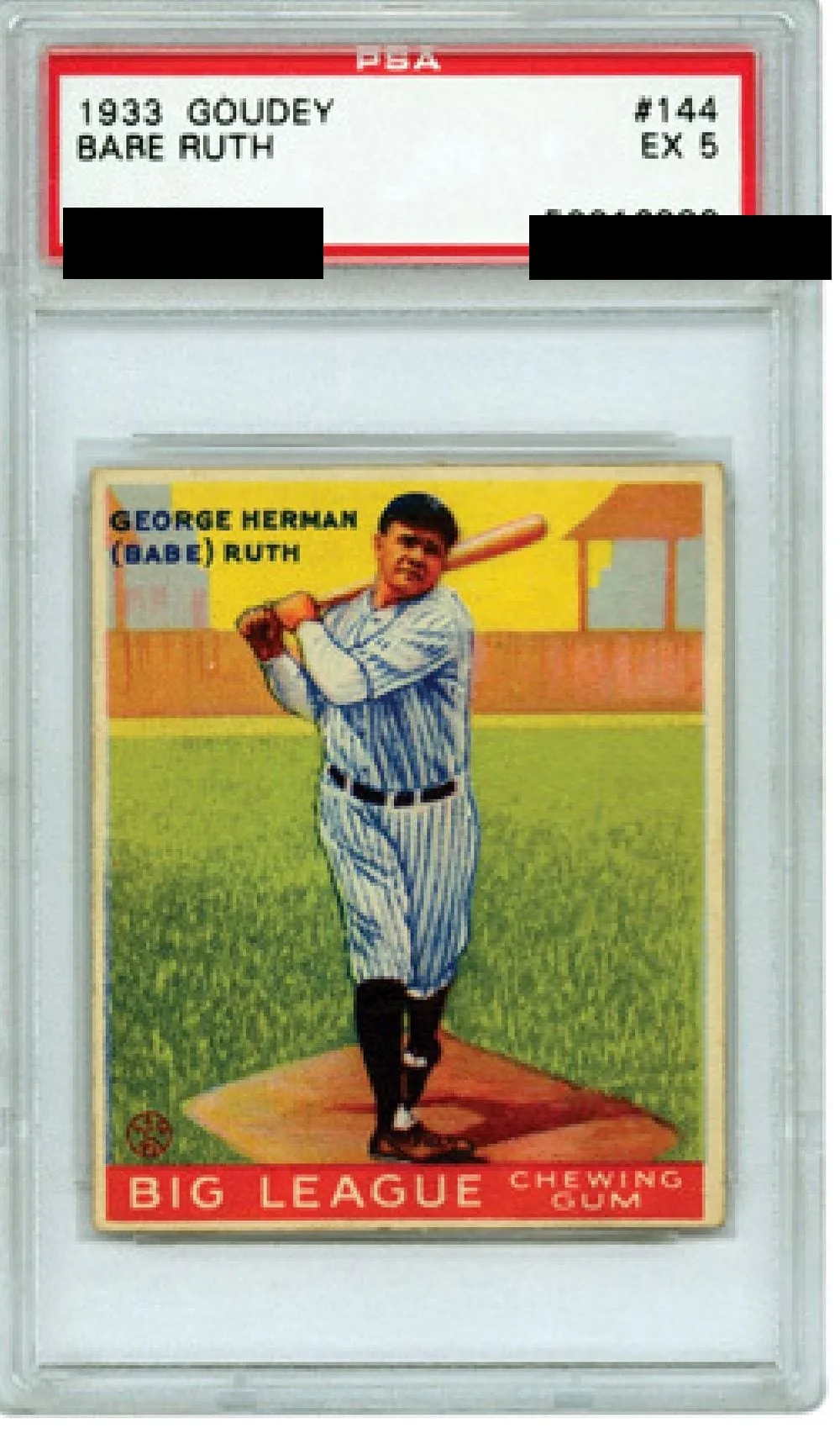
The safe play: vintage and locked-in legends. Mantle. Jordan rookies. Retired stars whose legacy is finished and isn’t going anywhere. The value on these is stable because there’s no season left to ruin it. Nothing that happens next year changes who Mickey Mantle was.
And here’s the thing about that second pile — for those cards, grading isn’t really optional if resale is your goal.
Grading doesn’t just add value. It unlocks it.
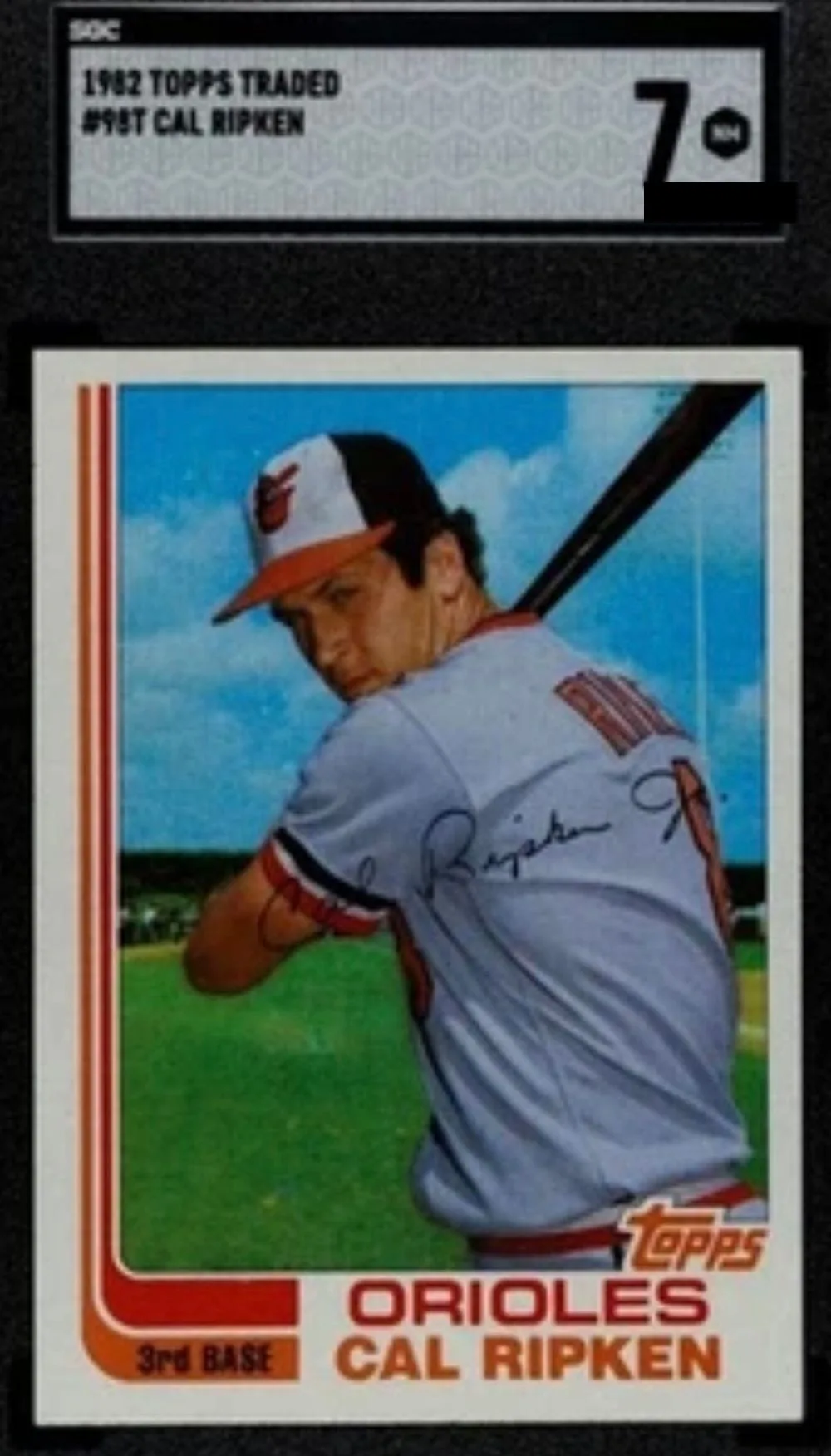
If you’re planning to sell, you will almost never get full value on a big vintage card while it’s raw. Not because the card isn’t great — because the buyer can’t trust it.
A grade does two jobs at once. It tells the buyer the condition, and it tells them the card is real. On a Mantle or a Jordan rookie, that second part is half of what they’re paying for. People want to know what they’re buying, and they want to know it’s not a fake. Slab it, and you’ve answered both questions before they ask. Leave it raw, and no matter how clean it looks, you’re leaving money on the table — because you’re asking a stranger to take your word for it.
Let me tell you why buyers don’t take anyone’s word for it.
A $65 lesson at the antique mall
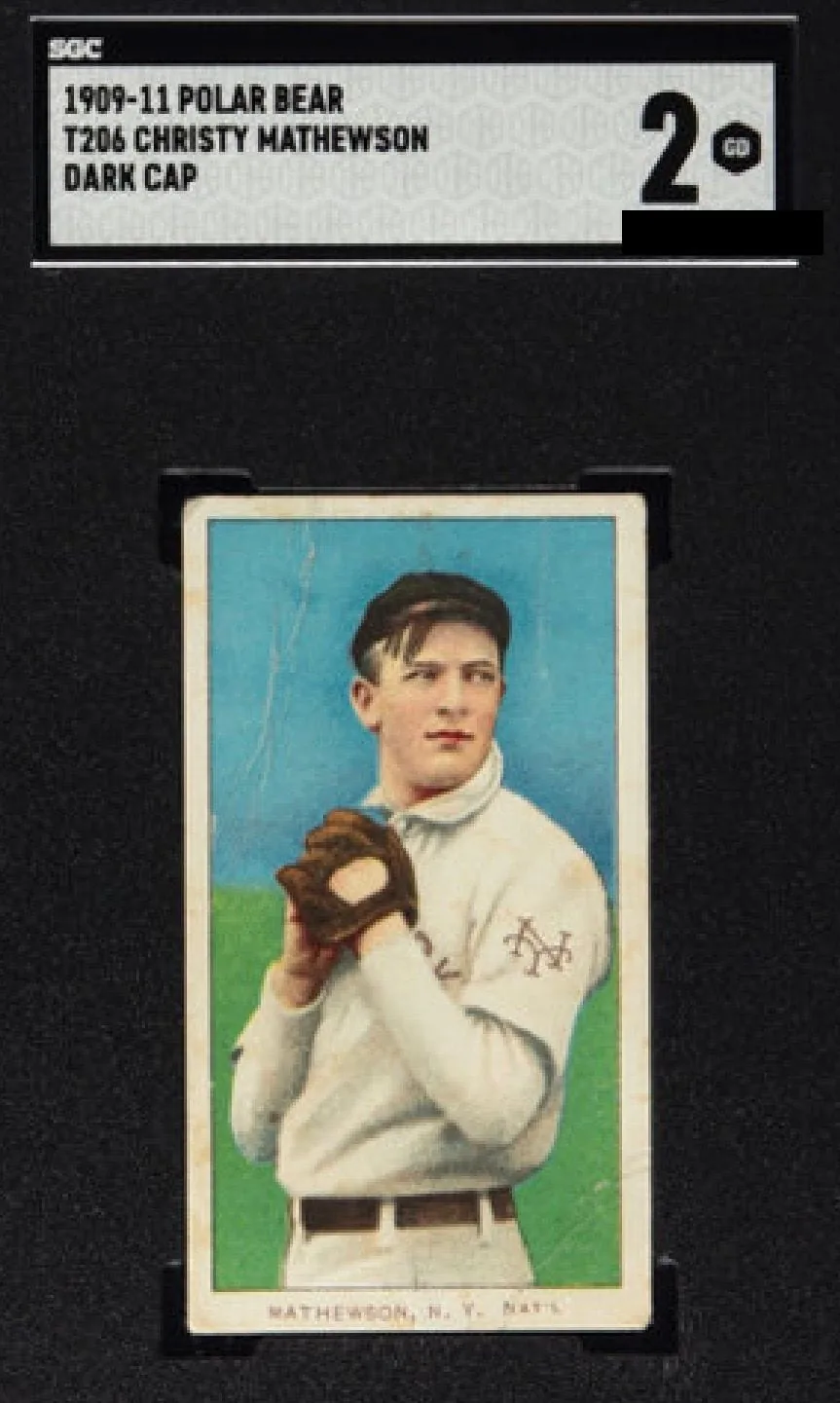
I’ll be honest — I got burned once, and it taught me exactly why graded vintage commands the price it does.
I was at an antique mall and spotted a Mike Schmidt rookie, ungraded, for sixty-five bucks. I wasn’t paying attention. I just bought it. Then I took it out of the case, and the second it was in my hand I knew — it felt plastic-y. It was a fake. A clean-looking reprint that I’d glanced at, wanted to be real, and bought without thinking.
Sixty-five dollars isn’t a fortune, but the lesson was worth more than the money. That is what a slab prevents. The buyer of a graded Schmidt rookie never has to have my antique-mall moment. They never have to wonder. That certainty is the product — and it’s why authentication, not just condition, is baked into what graded vintage sells for.
So — is it worth grading your card?
Run it in this order:
- Assume it’s not a 10. Decide from reality, not hope.
- Find the breakeven grade. Pull eBay auction-only sold comps and ask the lowest grade you’d need to come out ahead — not the dream grade.
- Factor your cost basis. Free from a collection and bought-raw-at-a-show are two different decisions.
- Count the true cost, not the grading fee. Add insured return shipping, shipping to PSA, and any insurance they require. The real number is often $25–$30 more than the sticker — enough to flip a “yes” into a “no.”
- Price in the wait. Three to nine months, the cheap tier currently suspended, and a whole season of player risk if it’s a modern active guy.
- Know which pile you’re in. Modern active player = a gamble that needs the math to clear. Vintage legend = a stable, safe play where grading is practically required to realize full value.
Grading is a tool, not a reflex. Used right, it unlocks value and proves your card is real. Used on a reflex, it’s a slow, expensive way to turn an $8 raw card into an $8 slab — minus the fee.
Be honest about which card you’re holding, and the answer usually writes itself.
Want to run these six steps on your own card in about a minute? Use my breakeven calculator — it has current PSA, SGC, CGC and TAG fees built in. And if you’re new to the process itself, start with how grading actually works in 2026, or see the math applied set by set in my 1952 collecting guide.
Related articles
-
PSA Paused Cheap Grading. Here Is the New Breakeven Math.
PSA suspended its Value tiers in June 2026, tripling the entry price of grading. What that do… Read the guide → -
How Card Grading Works in 2026
A start-to-finish walkthrough of how PSA card grading actually works in 2026 — prepping, subm… Read the guide → -
1955 Topps Checklist, Rookies and Complete Set Guide
A practical guide to the 206-card 1955 Topps baseball set, including key rookies, stars, card… Read the guide →