The 1952 Star-Cal Decals
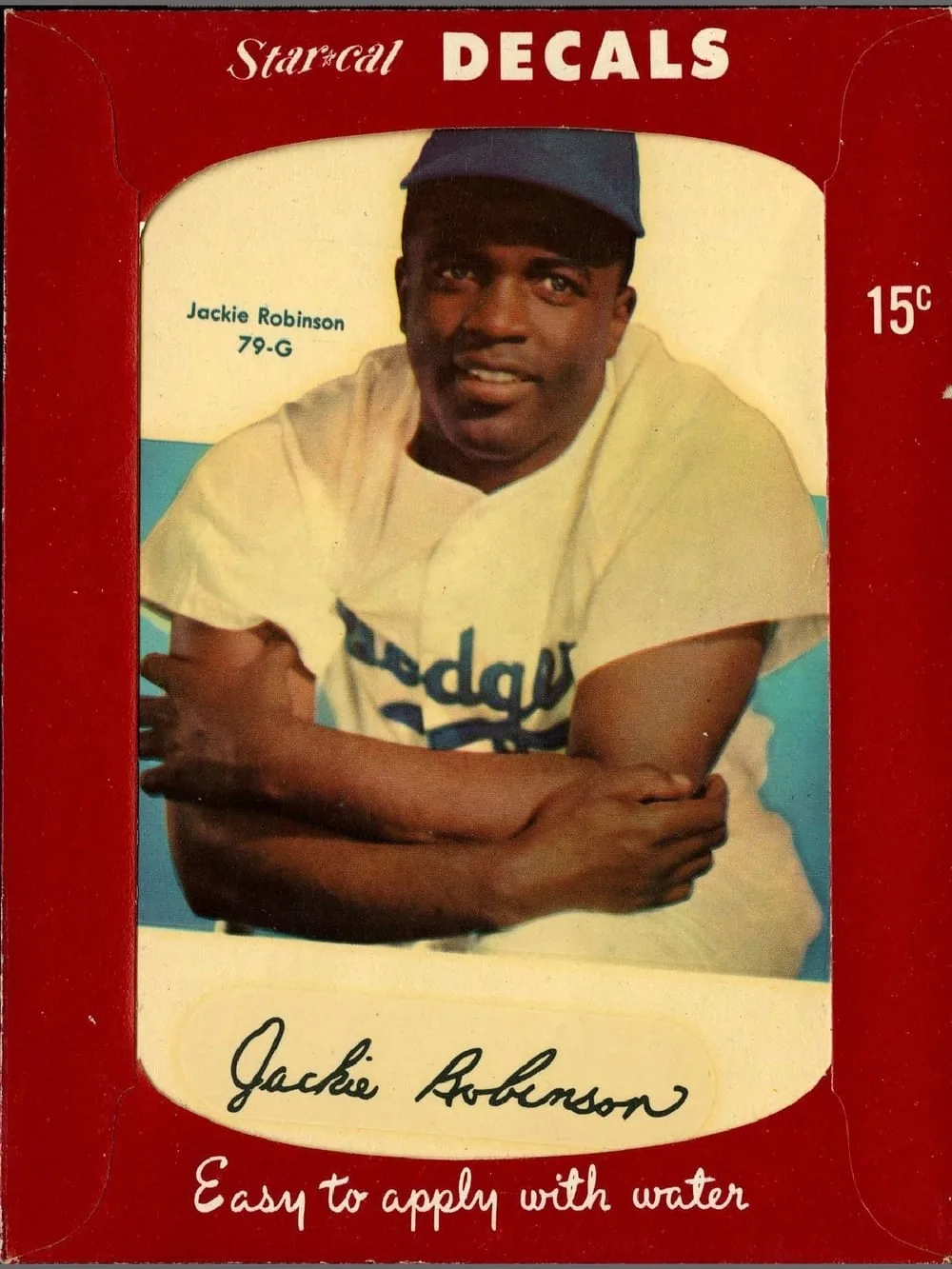
Every collectible from 1952 fought the same enemies — rubber bands, bicycle spokes, shoeboxes, moms with trash bags. But one issue had a threat built right into the product: it was a decal. The whole point was to peel it and stick it to something. Every single one that got used the way it was intended is gone forever.
That’s the 1952 Star-Cal set — and it includes a Mickey Mantle that’s genuinely rarer than his famous ‘52 Topps card, one that was meant to end its life on the side of a kid’s lunchbox.
Disclosure: This article contains eBay affiliate links. If you buy through them, I may earn a small commission at no extra cost to you — it helps keep this site going.
What are Star-Cal Decals?
The Meyercord Company of Chicago was a decal maker, and in 1952 they turned their machinery on baseball. The result: big, beautiful water-slide decals — 4⅛” by 6⅛”, each with a full-color player image and a facsimile autograph — sold in distinctive red-bordered envelopes.
And here’s my favorite detail: these weren’t sold at the candy counter next to Topps and Bowman. Meyercord was a decal company, so Star-Cals were sold where decals were sold — paint and hardware stores, off counter displays next to the varnish. Imagine being a kid in 1952 and finding Mickey Mantle at the hardware store.
The packaging backs listed everything you could stick your hero to: mirrors, walls, lunch boxes, books, lockers, furniture, trays, lamp shades. Meyercord even suggested sticking one directly to your bedroom wall and framing it with colored tape. I’m sure mothers across America were thrilled.
Two types, one hundred decals, weird numbering
There are two 1952 Star-Cal types, same design, same red envelopes:
- Type 1 — 68 decals, one player each. This is where the Mantle lives. Mantle appears ONLY in Type 1.
- Type 2 — 32 decals, two players each (pairings like Snider/Roe and Hodges/Reese). Some stars, like Mays, appear in both types.
The numbering is its own oddball puzzle: Type 1 starts at No. 70 and runs with letter suffixes A through G — so you get designations like 70D and 80A. Nothing about this issue behaves like a normal card set, which is half the charm.
The star power is absurd: Mantle, Mays, Jackie Robinson, Ted Williams, Stan Musial, Yogi Berra, Ashburn, Schoendienst, Irvin — one of the highest concentrations of Hall of Famers of any 1952 issue.
Why survivors are so rare — and the grading catch
Do the survival math. A decal that got used was destroyed by definition — soaked, slid onto a surface, and left to fade on a lunchbox that hit the garbage in 1958. What survives today is almost entirely unused stock, still sealed in the original red envelopes — the ones kids didn’t get to, or hardware stores never sold.
That creates a grading quirk unique to this issue: the decal inside can be beautiful, but the flush-fitting red wrapper almost always shows edge wear — so when a sealed example gets graded, there’s a genuine question of whether you’re grading the near-perfect decal or the beat-up envelope around it. Sealed-in-envelope examples carry a premium either way; it’s how these are most often found and most desired.
What are they worth?
Commons start around $20–$30 — genuinely cheap for something this scarce and this old. Stars run into the hundreds. And the Mantle is the king: examples have brought $5,000+ at auction, and a complete Type 1 set including the Mantle sold for $42,000 at REA. As Sports Collectors Daily put it: everybody thinks of the ‘52 Topps Mantle — but the Star-Cal Mantle is much rarer.
That’s the recurring theme of this whole 1952 series, and Star-Cal might be its purest case: the fame lives with Topps, the scarcity lives everywhere else.
My take
A Mickey Mantle that was sold at the hardware store, designed to be dissolved in water and stuck to a lunchbox, where every used copy destroyed itself — and the survivors are rarer than the most famous card in the hobby at a hundredth of the price. If that doesn’t capture why I love the oddball stuff, nothing will. If you ever spot a red Star-Cal envelope in a collection — especially with a star name showing through — treat it like the little miracle it is. It survived its own instructions.
Found one? With the sealed-envelope premium and the wrapper-vs-decal grading question, these are worth understanding before you submit. (See “Is It Worth Grading Your Card in 2026?” and “How Card Grading Works in 2026”.)
Explore every 1952 set in the complete 1952 guide →
Related articles
-
1952 Topps Red Backs vs. Black Backs: Which Is Worth More?
A collector’s guide to 1952 Topps red-back and black-back variations — which cards have them,… Read the guide → -
The 1952 Dixie Lids
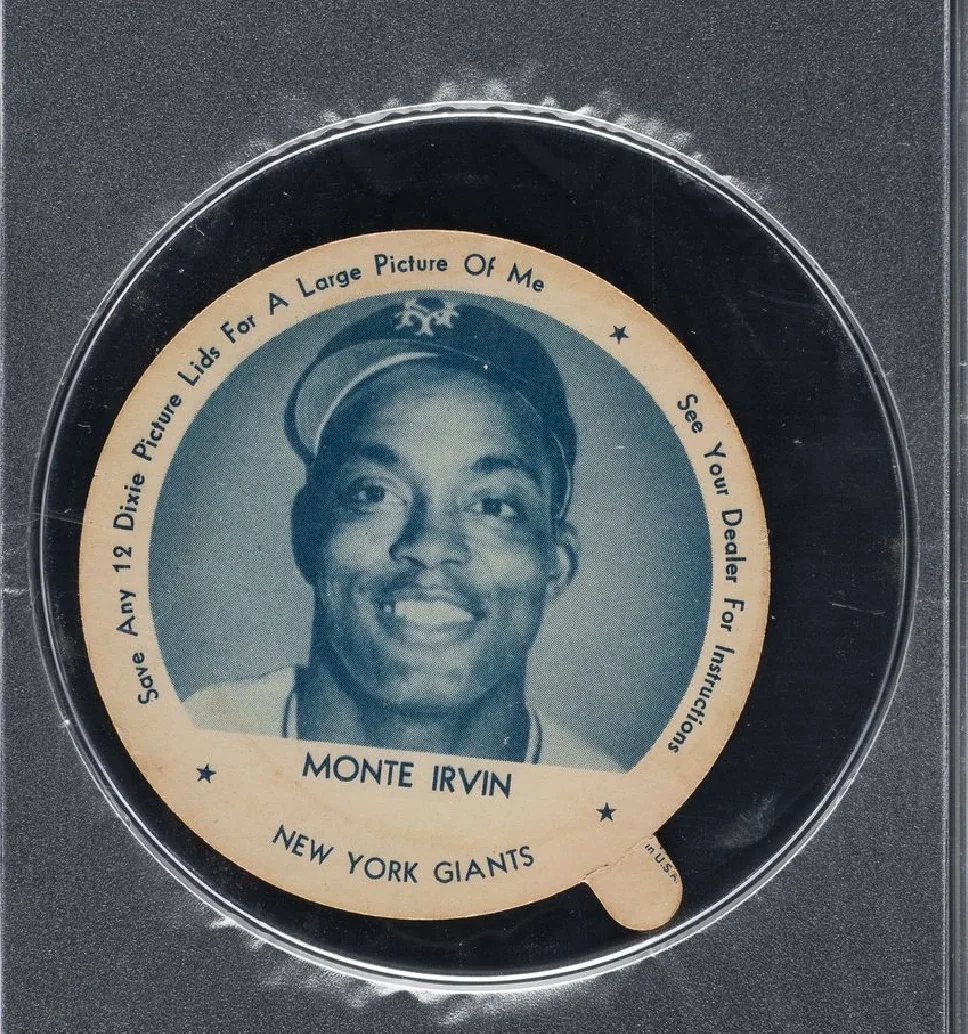
The 1952 Dixie Lids — a 24-lid ice cream set with just 29 graded examples in existence and no… Read the guide → -
The 1952 Berk Ross Set
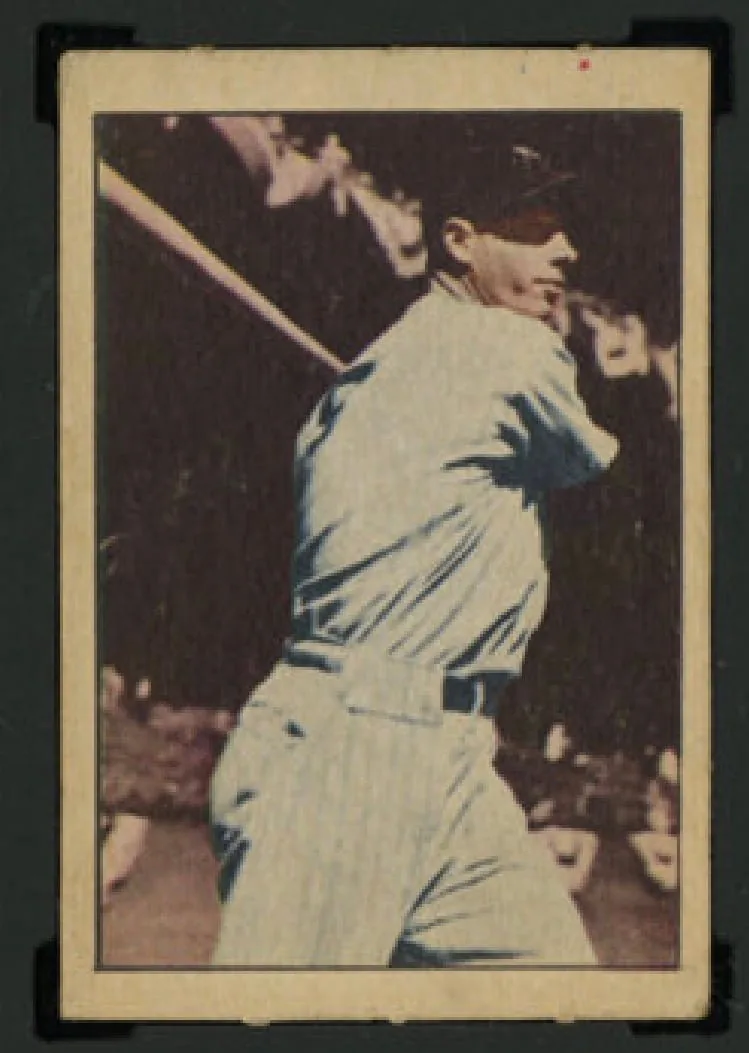
The 1952 Berk Ross set — the unlicensed 'bootleg' that gave the hobby its only 1952 Joe DiMag… Read the guide →